How Woodhouse timber frame homes tame seasonal temperature swings.

Signs of winter giving way to spring are everywhere: the ice is melting, colorful bulbs are beginning to emerge, and the birds are singing. But inside timber frame homes, temperatures are as steady and comfortable as ever. Strategically designed to deliver maximum comfort alongside remarkable efficiency, Woodhouse timber frame homes are known for consistency through dramatic shifts in the weather. Here’s a look at how these high-performance homes guard against the effects of changing seasons.
How Do Timber Frame Homes Manage Rapidly Changing Weather?
Climate-minded design and quality materials make timber frame homes powerhouses against the harsh effects of temperamental weather.
Expert Passive Design
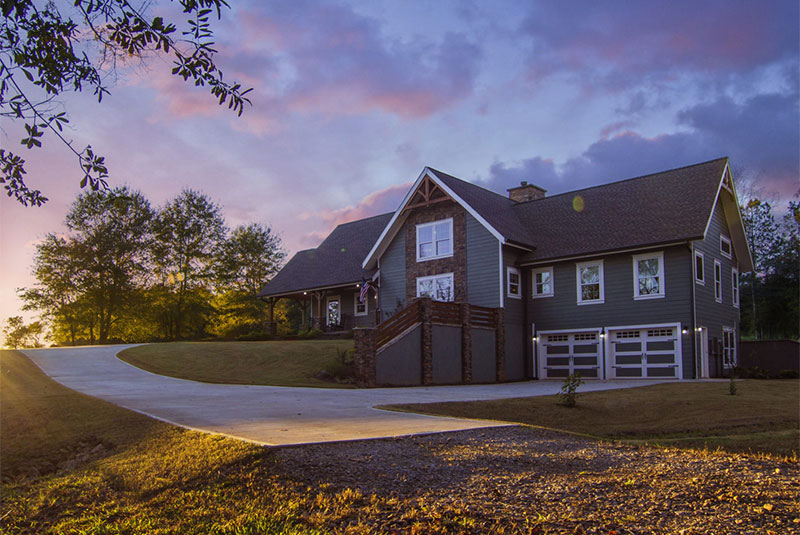
Whenever possible, Woodhouse timber frame homes are designed to optimize passive solar heating and cooling. For example, thoughtfully placed windows allow cross-ventilation. And architectural elements like steep overhangs and covered decks provide shade during hot afternoons while still allowing welcome solar gain in colder months.
Home orientation also impacts passive solar heating. Smart siting, which takes advantage of seasonal changes, geography, and even tree canopies, makes a big difference for year-round comfort in every part of your home.
Smart Materials for a High-Performance Envelope
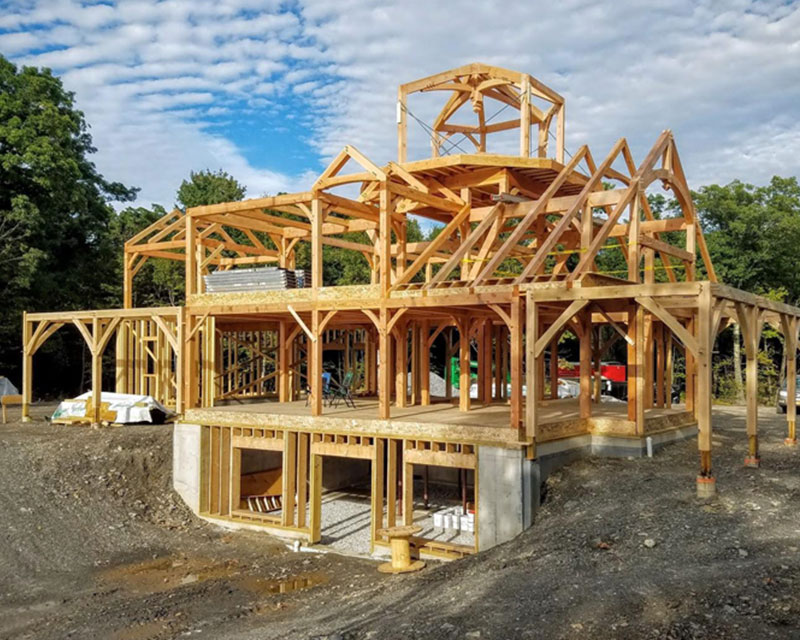
Woodhouse timber frame homes use structural insulated panels (SIPs), a superior alternative to the fiberglass insulation inside conventionally framed houses. SIPs are constructed from two oriented strand board (OSB) layers filled with an insulating material, typically either expanded polystyrene (EPS) or polyurethane (PUR) foam. Woodhouse uses PUR SIPs almost exclusively, as they offer more desirable benefits: a higher R-value per inch (a measure of thermal resistance, or the ability to thwart heat loss), improved fire safety, superior moisture resistance, and reduced installation labor.
Not only are they airtight, but the panels lock together, resulting in a home that’s three to five times tighter than conventional home enclosures. For managing dramatic temperature swings, this construction system has two notable features: minimizing thermal bridging and preventing trapped moisture. A thermal bridge is an isolated space with higher thermal conductivity than the surrounding materials, allowing heat to transfer more easily through the wall assembly. As for moisture, when it becomes trapped, it not only poses a risk to the home’s wood over time but also reduces insulation efficacy. Woodhouse’s smart SIP-panel construction system greatly reduces both concerns.
Note: With such a tight envelope, Woodhouse timber frame homes use whole-home ventilation systems that continuously exchange stale indoor air for filtered fresh air. Learn more about that here.
Comfort Starts Here
Fortified by these key factors, the result is a home that feels balanced year-round—cooler when summer heat builds, warmer when temperatures drop, and consistently comfortable through the unpredictable transitions in between. Ready to learn more? See how timber living feels at Woodhouse’s online gallery, or contact us to discuss your vision for your own custom project.
Meet the Experts
This post was reviewed by Dwayne Shell. Dwayne is the Director of Sales and Marketing at Woodhouse, The Timber Frame Company, with over 30 years of experience in conventional and manufactured home sales.