
From polished surfaces to waterfall edges, each detail contributes to a luxurious kitchen experience.
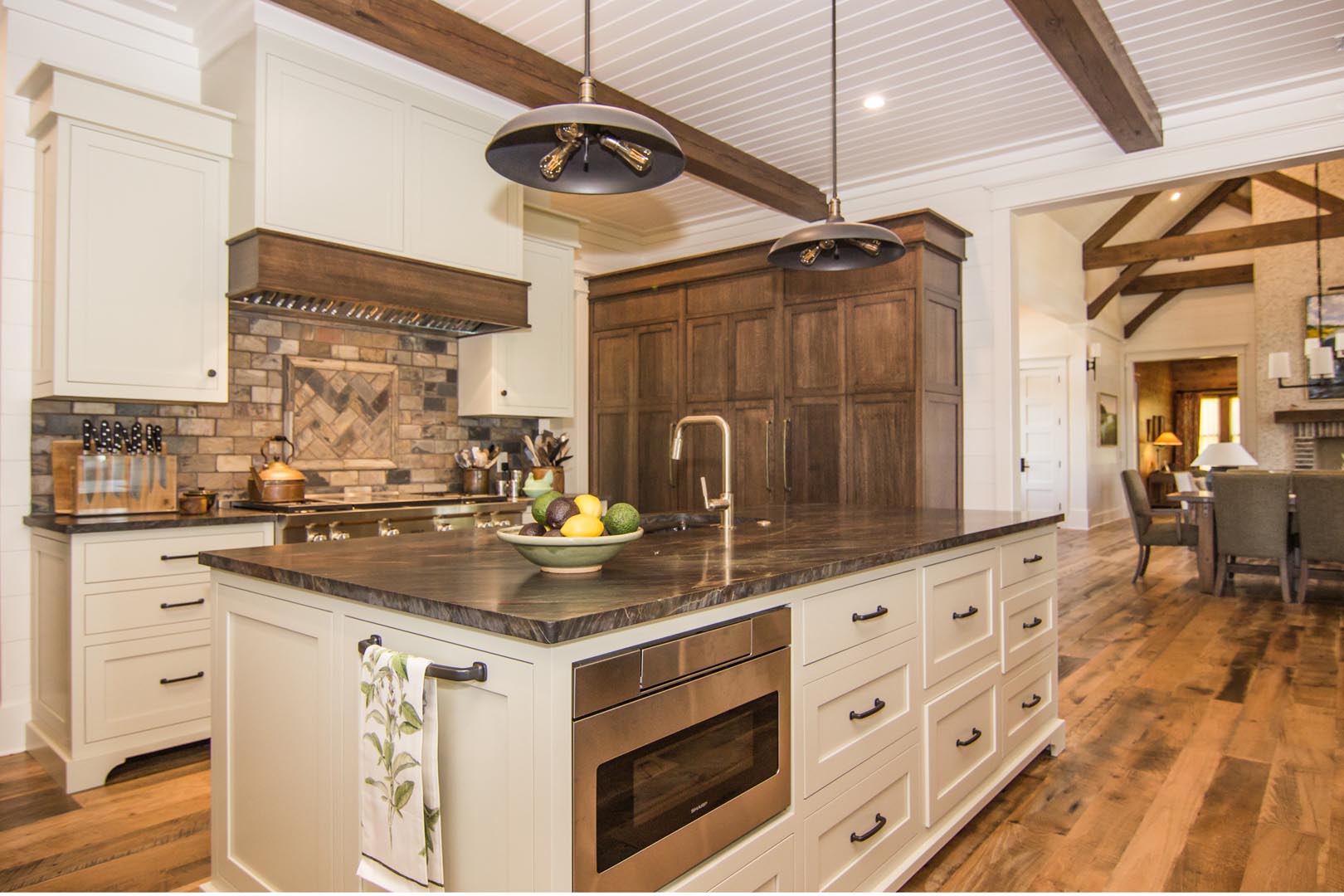
When it comes to kitchens, particularly in custom timber frame homes, luxury lives in the details. Take countertops, for example. These surfaces do more than provide a place to work; they anchor the aesthetic and define the character of the space. Even the smallest choices—how a seam aligns, how an edge is finished, or how a surface reflects light—can transform a countertop from functional to exceptional.
Thoughtful decisions around countertop material, finish, edge, and layout create a kitchen that balances everyday practicality with enduring elegance, all while reflecting the homeowner’s personal style.
Here are a few pointers to keep in mind so you and your design team can make choices that are purposeful, cohesive, and tailored to your unique home.
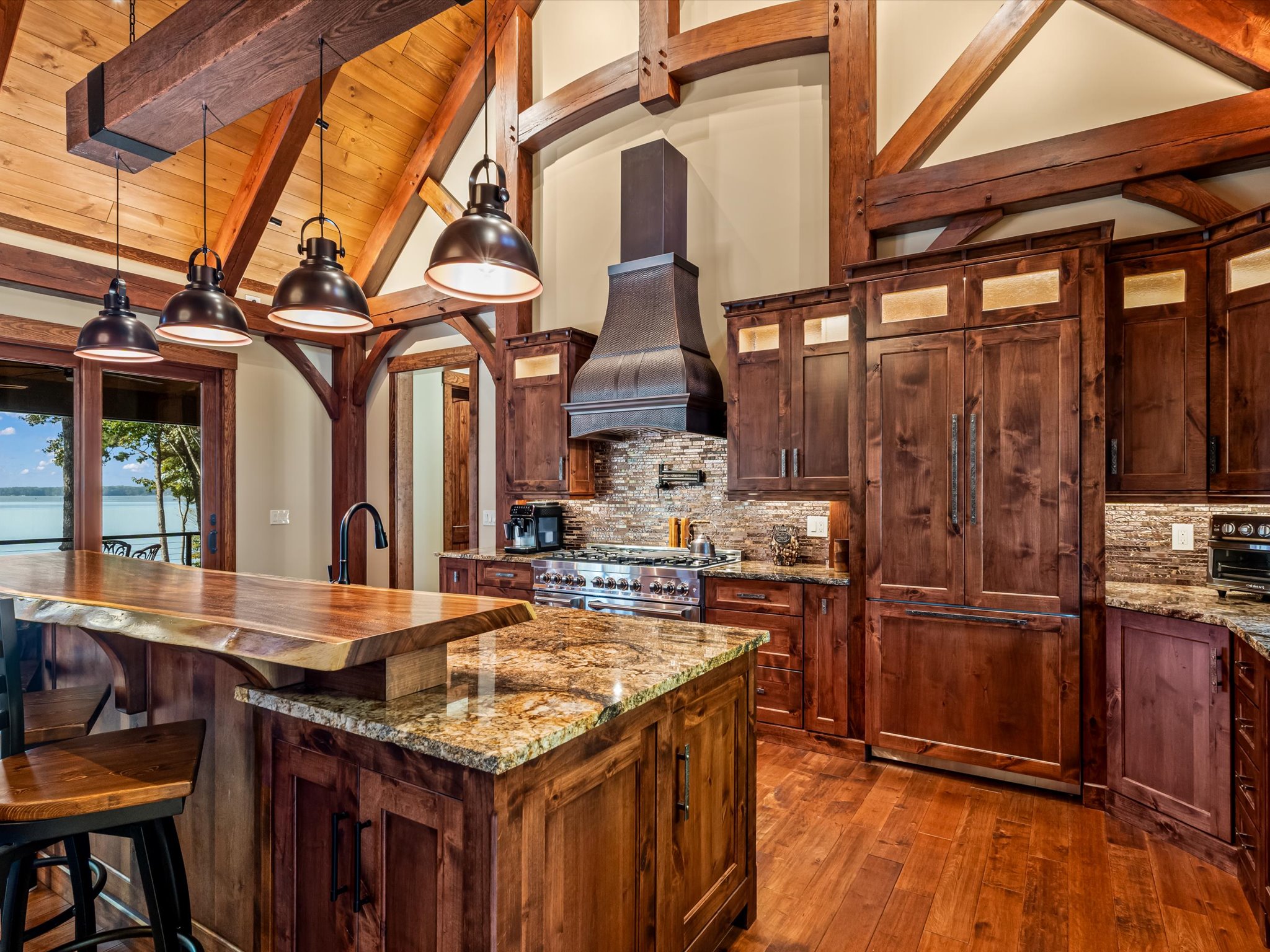
A live-edge wood bar mingles with a striking stone countertop in this timber frame kitchen.
Material Matters: Stone, Wood, and Beyond
Countertop material sets the visual and tactile foundation for the kitchen—an especially important choice in timber frame homes, where natural materials and exposed structure play a central role in the design. These are a few popular choices:
Quartz
This is an engineered surface, prized for its durability and low maintenance.
Heat tolerance: Because it contains resin, sudden or direct heat from hot cookware can cause discoloration or cracking; trivets are recommended.
Maintenance: Nonporous and easy to clean, quartz does not require sealing and typically needs only mild soap and water for routine care.
Granite
A natural stone, it’s known for its strength and distinctive patterns that bring timeless character to a space.
Heat tolerance: Granite can withstand the heat from a hot pan, though the use of trivets and pot holders will help protect the finish over time.
Maintenance: Granite should be sealed periodically to help prevent staining and maintain its resistance to moisture and bacteria.
Marble
Another natural stone, marble offers elegant veining and a classic, high-end look.
Heat tolerance: Marble can tolerate some moderate heat, but prolonged exposure to hot cookware can cause discoloration or thermal shock.
Maintenance: Marble is porous and softer than other natural stones, so it requires regular sealing and prompt cleanup to prevent etching and staining.
Soapstone
Known for its smooth feel and understated depth, soapstone develops a natural patina over time. Areas of frequent use may gradually lighten, especially around sinks and prep zones.
Heat tolerance: Soapstone is highly heat tolerant and can typically handle hot cookware.
Maintenance: It does not require sealing, though some homeowners apply oil periodically to deepen its color.
Butcher Block
Thanks to its solid wood construction, this material introduces natural warmth.
Heat tolerance: Hot pans should never be placed on the surface.
Maintenance: Butcher block requires regular waxing or oiling and occasional sanding.
Concrete
These countertops can be custom-cast to create a bold, modern statement.
Heat tolerance: While concrete is heat tolerant, the sealant is vulnerable to damage from hot pots and pans.
Maintenance: Concrete requires periodic resealing.
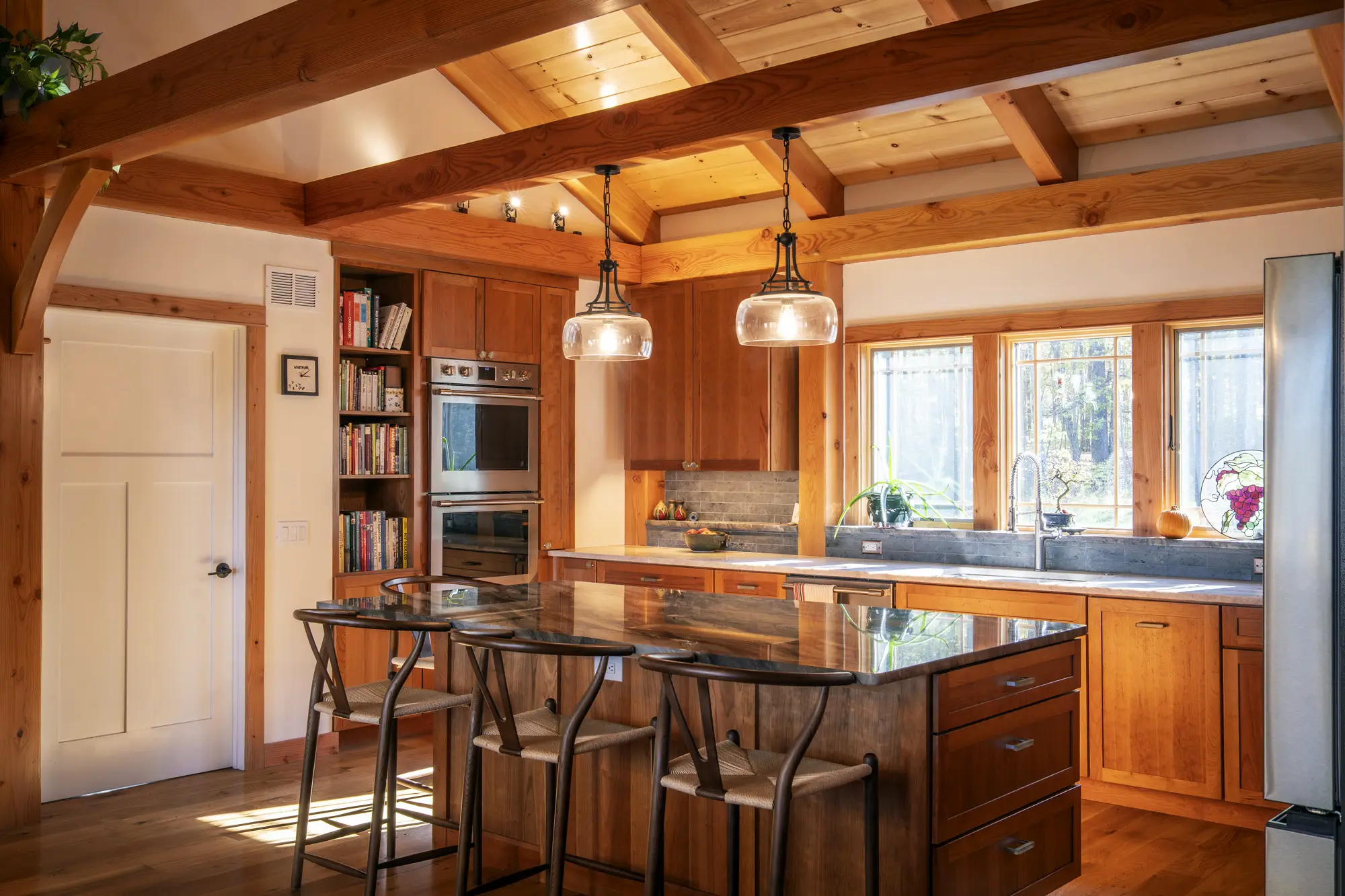
A polished finish gives the stone on this island its sparkling reflectivity.
Finishes That Speak to Craftsmanship
Stone countertops are available in several finish types, each offering a distinct look and feel. Polished surfaces are glossy and reflective, amplifying light and highlighting the color and pattern of the stone. Honed finishes have a smooth but matte appearance, creating a softer, more understated look. Leathered finishes add subtle texture, giving the stone a slightly rugged, tactile quality while still feeling refined. Because leathered finishes have a textured surface, they need thorough cleaning to keep food particles from lodging in the small indentations.

A thick countertop with a waterfall edge
Thickness and Visual Weight
Countertop thickness also plays a role in the overall look of the kitchen. Standard slabs, typically around 1.25 inches thick, offer a balanced, versatile profile that works well in many kitchens. Thick profiles, with edges measuring 2.5 inches and more, can help visually ground large islands. Mitered edges join two pieces of material at a precise angle so the surface appears thick while maintaining a lighter structure, often producing a crisp, contemporary line.
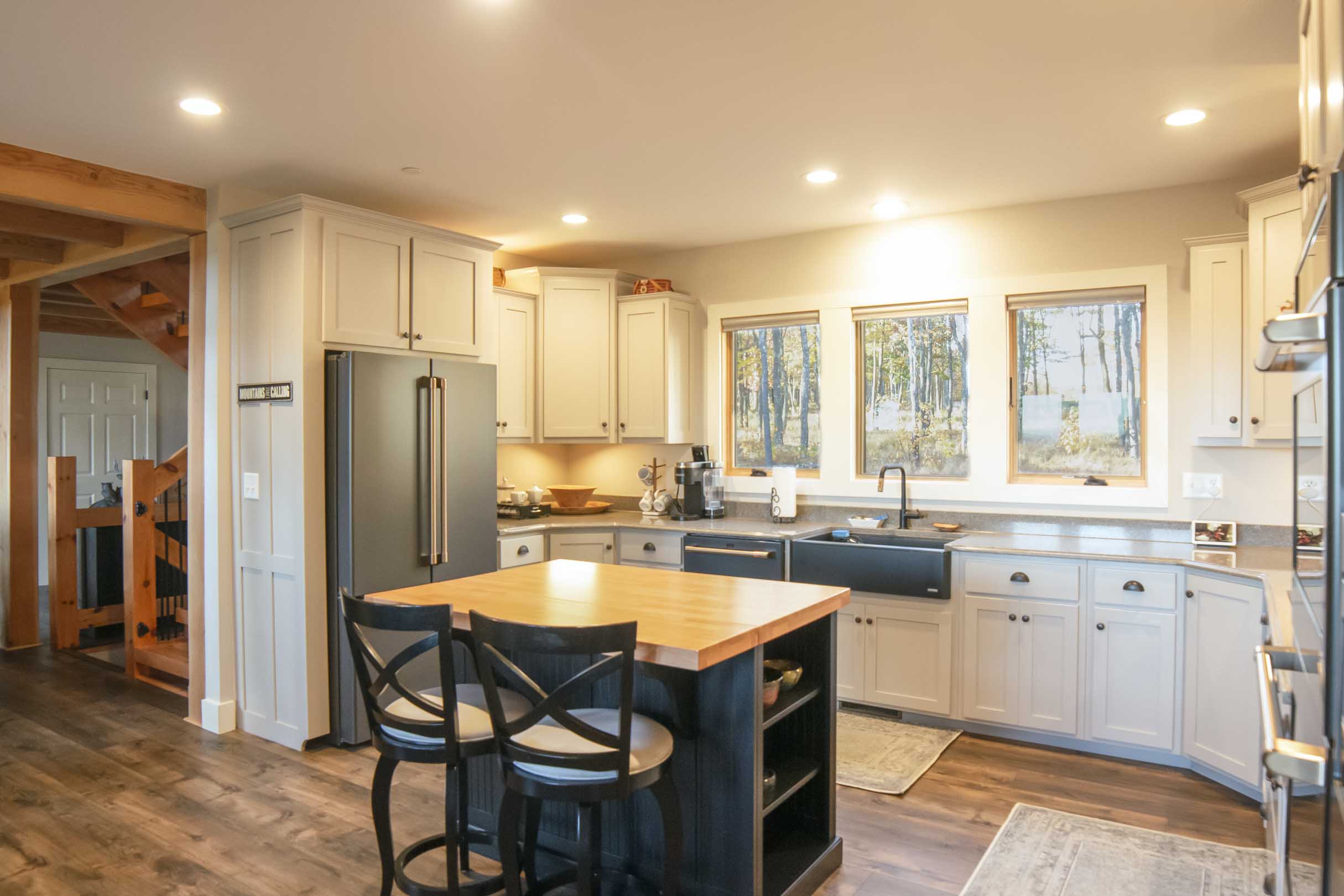
This timber frame home features two countertop styles — butcher block on the island with an eased edge and stone on the perimeter with a bullnose edge.
Edge Profiles That Shape Style
Countertop edge profiles also influence the look and feel of the kitchen. An eased edge features a clean, slightly softened square corner for a simple, contemporary look. A bullnose edge is fully rounded, creating a smooth, traditional profile that’s comfortable and durable. An ogee edge incorporates an elegant S-shaped curve, often used to add a more classic or decorative touch. A waterfall edge, where the countertop material continues vertically down the side of an island, creates a dramatic, sculptural effect that highlights the beauty of the stone.

Seams & Layout: Subtle Luxury
Strategic seam placement and slab layout elevate both form and function. Well-planned seams ensure the countertop reads as continuous and custom, enhancing visual cohesion. Even small considerations like pattern alignment or grain direction contribute to a high-end, bespoke feel.
Dialing in the Details
Every detail—material, finish, edge, or seam—shapes the visual and tactile experience of the kitchen. By exploring these options in Woodhouse’s portfolio, homeowners can make confident, design-forward decisions. Partnering with Woodhouse ensures every detail of your custom timber frame home is deliberate and curated. Reach out to get started today.
Meet the Experts
This post was reviewed by Dwayne Shell. Dwayne is the Director of Sales and Marketing at Woodhouse, The Timber Frame Company with over 30 years of experience in conventional and manufactured home sales.


