How subfloors and floor systems influence livability for timber frame homes.
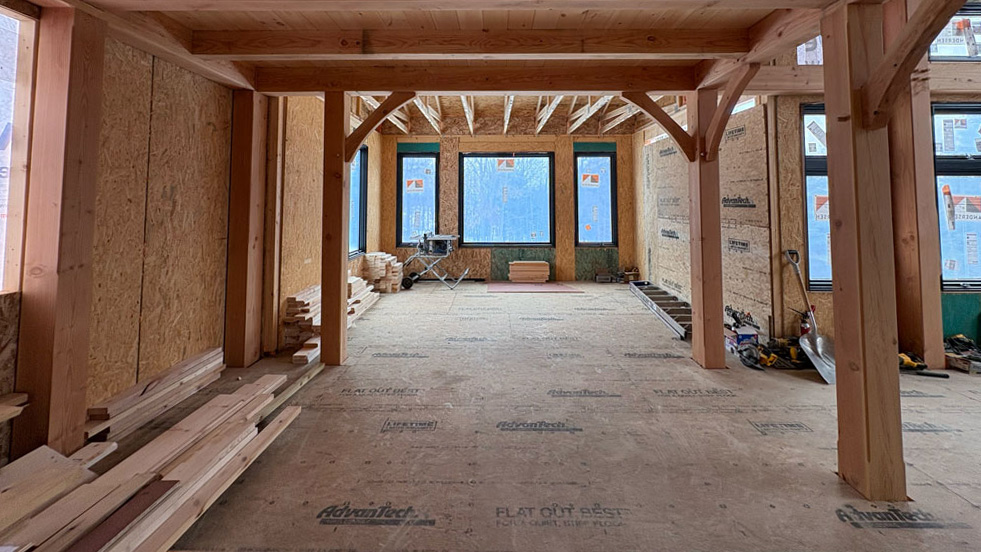
Table of Contents:
What is a Subfloor and Floor System?
A well-constructed floor is not seen; it’s felt. Solid, sturdy, and silent, each step brings comfort and reassurance. The unseen foundation of that sublime feeling is the subfloor and floor system, which make a significant contribution to your forever home’s overall appeal and longevity. In this introductory guide, we’ll cover the basics of subfloors and flooring systems. Here’s what you need to know:
What is a Subfloor and Floor System?
Similar to a home’s foundation, a subfloor establishes a strong, stable, and level surface for the finished flooring product, be it hardwood, tile, carpet, concrete, or an engineered product. Think of the subfloor as the intermediary between a home’s hidden framework and the surface under your feet. This important structural layer safeguards the visible flooring’s durability by giving it a solid, secure, and level base. The subfloor also contributes to overall home performance, helping prevent squeaks and protecting against moisture damage and structural stress on the joists.
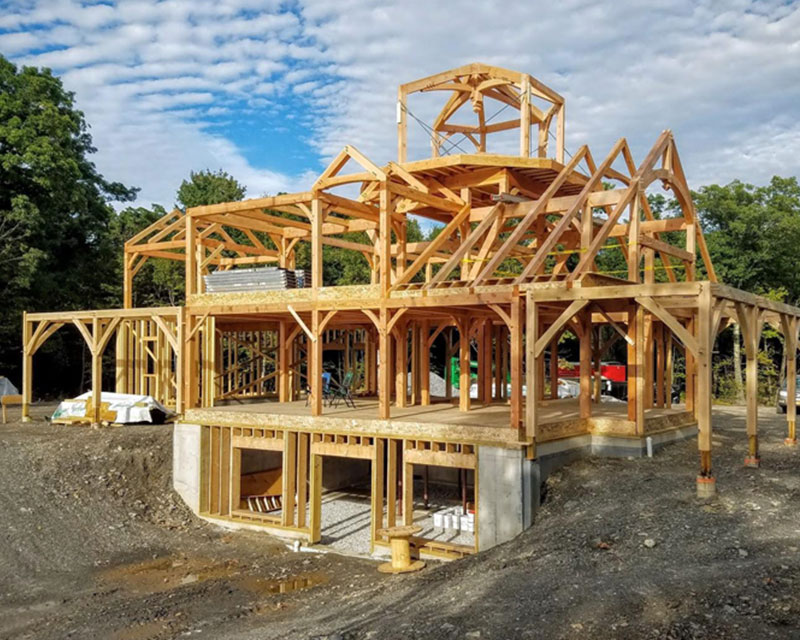
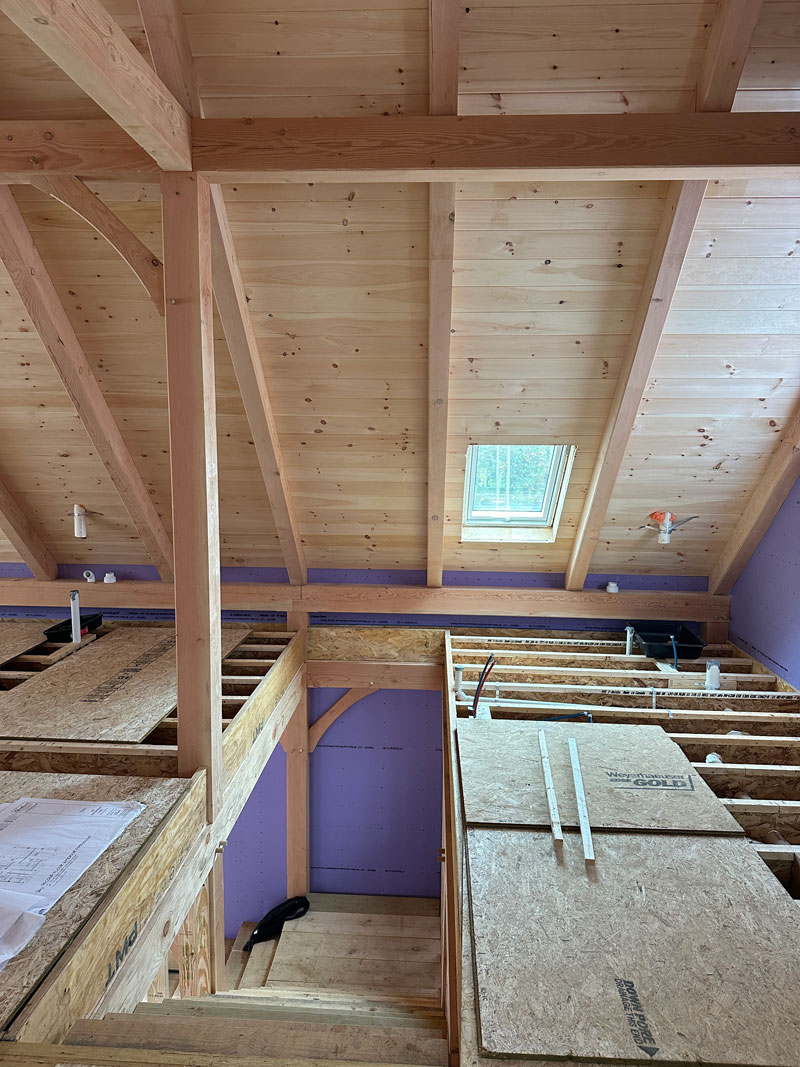
A floor system is the entirety of the flooring’s structural framework. Individual components include:
- Beams – These primary, horizontal supporting elements under the floor transfer weight to the vertical posts.
- Joists – These are secondary horizontal structural elements spanning the open space between beams. Joists align on top of the beams at 90 degrees and transfer weight loads to the beams.
- Panels – These are the subfloor elements that attach to the top of joists, creating a continuous flat surface for the flooring product.
- Underlayment – A layer installed between the subfloor and finished flooring that can provide cushioning, sound control, moisture protection, or surface leveling depending on the flooring type.
What are Common Subfloor Materials Used in Timber Frame Homes?
Subfloor materials vary depending on the application, but the most common materials include plywood and oriented strand board (OSB). In the right scenario, concrete is another option. Material choices also hinge on a room’s placement (basement, first level, or upper floor), room use, and regional climate.
Plywood
Look at a cross-section of a sheet of plywood, and you’ll see distinct layers of material. These are layers of wood veneer glued together. Each layer’s grain runs perpendicular to the one next to it, which increases strength and helps the plywood resist warping. Plywood is known for being strong and durable, but the quality of the bonding and the sheet’s thickness are often more important than the material alone.
OSB
OSB is another engineered material, this one made by using adhesives to compress and bond strands of wood together. Like plywood, proper strand orientation increases strength. OSB is often a lower-cost option and performs consistently when protected against moisture.
Concrete
In a slab foundation, the concrete slab itself serves as the base for finished flooring. When properly poured and finished, concrete can provide a durable and stable base.
Common Floor Systems in Timber Frame Homes
The right floor system optimizes a room’s performance in everything from comfort to thermal regulation. It’s an unglamorous job, but each system brings its own strengths. These are some common options:
- Timber Frame Floor System. In this system, the timber beams serve as the structural support, with 2×8 tongue-and-groove planks applied directly across them. The underside of this tongue-and-groove, alongside the exposed beams, forms the finished ceiling for the space below and showcases the home’s timber framing.
- Conventional Joist Systems. Conventional and popular, this system uses wood joists spanning between beams or walls to support the subfloor. This cost-conscious option tends to have a lighter feel underfoot and can perform quite well when properly engineered.
- Engineered Floor Systems. Built from factory-made components such as I-joists or open-web floor trusses, these systems allow longer spans, flatter floors, and efficient routing of mechanical systems. Because the components are engineered to work together, they can help reduce squeaks and bounce, imparting a sense of luxury.
Luxury With Every Step
When it comes to subfloors and floor systems, “deflection” is the measure of how much a floor flexes when walked upon. Woodhouse engineers its floor systems to stricter standards than typical building code requirements, resulting in significantly less movement underfoot. “This tighter deflection criteria results in a stiffer floor system that feels solid underfoot, which allows you to feel the quality of a well-built home when you enter the space,” explains Todd Mahosky, Vice President of Operations at Woodhouse.
Floored by the Options?
You don’t need to be an expert in flooring systems — leave that to your design and build team. Our ability to collaborate with other architecture and building professionals results in optimal custom solutions based on site needs, home design, and your lifestyle goals. Contact us to start your own project.
Meet the Experts
This post was reviewed by Dwayne Shell. Dwayne is the Director of Sales and Marketing at Woodhouse, The Timber Frame Company with over 30 years of experience in conventional and manufactured home sales.