
Timber frame homes and inviting decks are a natural pair. Get everything you need to envision, plan, and design your ultimate deck space.

Table of Contents:
What Are the Variables That Optimize Deck Siting?
What Are Some Examples of Lifestyle Customizations for a Deck?
How Does Deck Design Influence Aesthetics?
Are There Structural Considerations?
When Are Deck Railings Required?
Looking for Deck Design Ideas?
For timber frame homes, thoughtful deck design enhances the architecture, functionality, and the homeowner’s lifestyle. When it comes to envisioning, planning, and designing these high-performance and beautifully integrated outdoor spaces, discover what Woodhouse has on deck for your ultimate dream home.
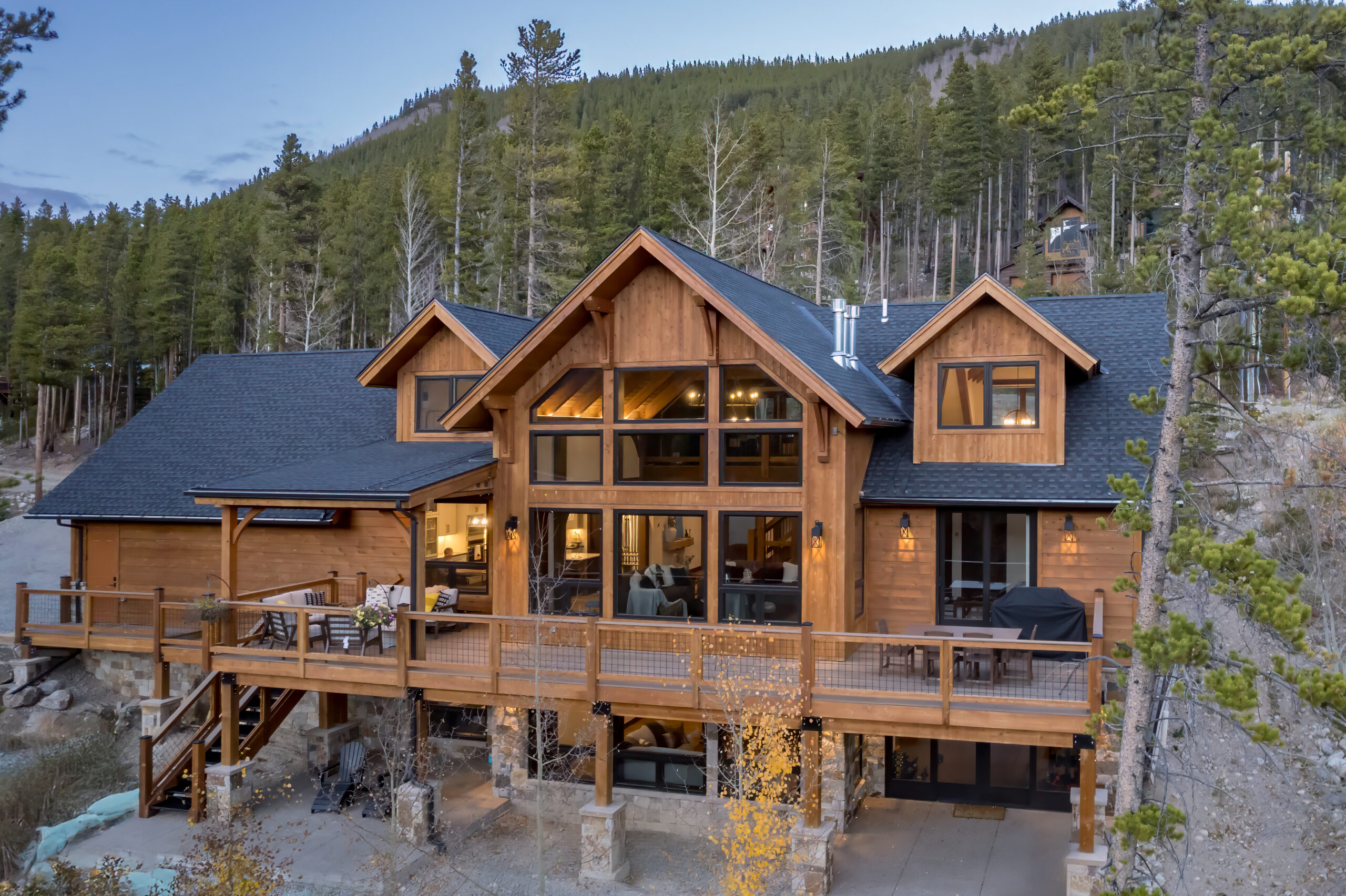
What Are the Variables That Optimize Deck Siting?
Three things elevate a deck from an appendage to a feature that beckons you outside to enjoy the good life.
1. Intoxicating Views. An inspiring view lifts your spirits, calms your mind, and connects you to nature. A deck transforms you from observer to participant, bathing you in natural light, fresh air, and the exhilarating perfume of the outdoors. Think salty air, pungent pines, or a hint of petrichor from those thunderclouds in the distance.
2. Sun Exposure. Proper siting is part of a timber frame home’s passive solar heating system. This philosophy can also apply to a deck. Nothing destroys a deck experience faster than a relentless, sweltering sun or frigid breezes. Adjusting deck placement, shape, or screening can significantly impact your comfort.
3. Creating “Flow.” Decks expand a home’s living space, but this value is realized only when they are integrated into traffic patterns that encourage their use. The Woodhouse Banff design thoroughly illustrates this concept. The kitchen and coffee bar open directly to the screened-in outdoor dining space, which itself is connected to an expansive, partially covered deck. Private deck spaces, like the outdoor sleeping nook and shower, are logically tucked in next to the primary suite.
What are Some Examples of Lifestyle Customizations for a Deck?
Woodhouse designs decks that help you do more of what brings you joy. Love the lake life? Imagine fishing directly from your deck in the Alpine Valley design (above). What about bird watching from this tree-top deck design in New York’s Finger Lakes? Hot tubs (a ski chalet must-have), outdoor kitchens, fire features, and even kid- or pet-friendly designs bring extra sparkle to your timber frame home.
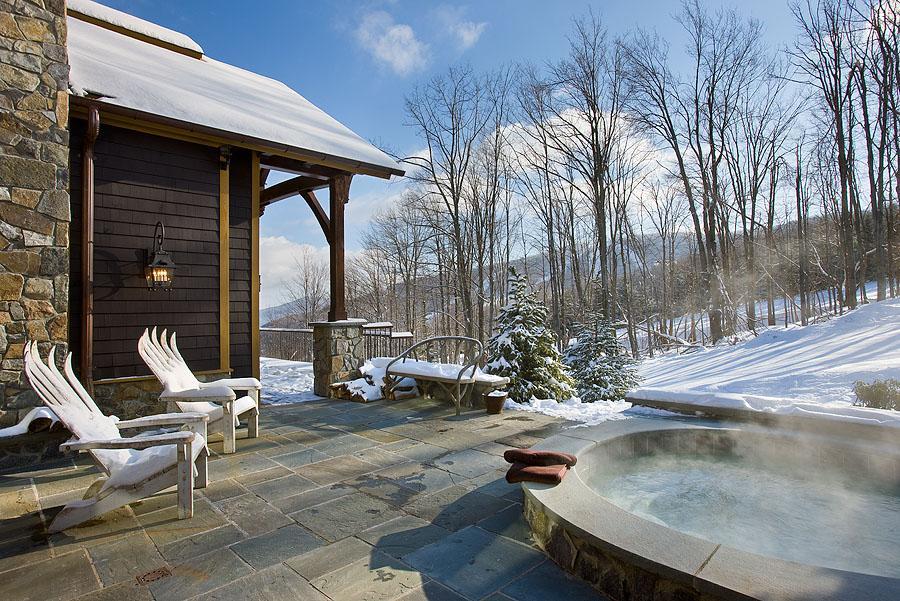
How Does Deck Design Influence Aesthetics?
Woodhouse has more than 20 timber frame home styles, and decks help define each one’s distinct look and feel. Some examples include:

European: The elegant curvature and gazebo accentuate the sophisticated, Old World appearance of the WisteriaManor, seen above.

Mountain: Rugged mountains evoke a formidable sense of awe, and MistyMountain’s tapered stone pillars, hefty timbers, and commanding presence reflect that same character.
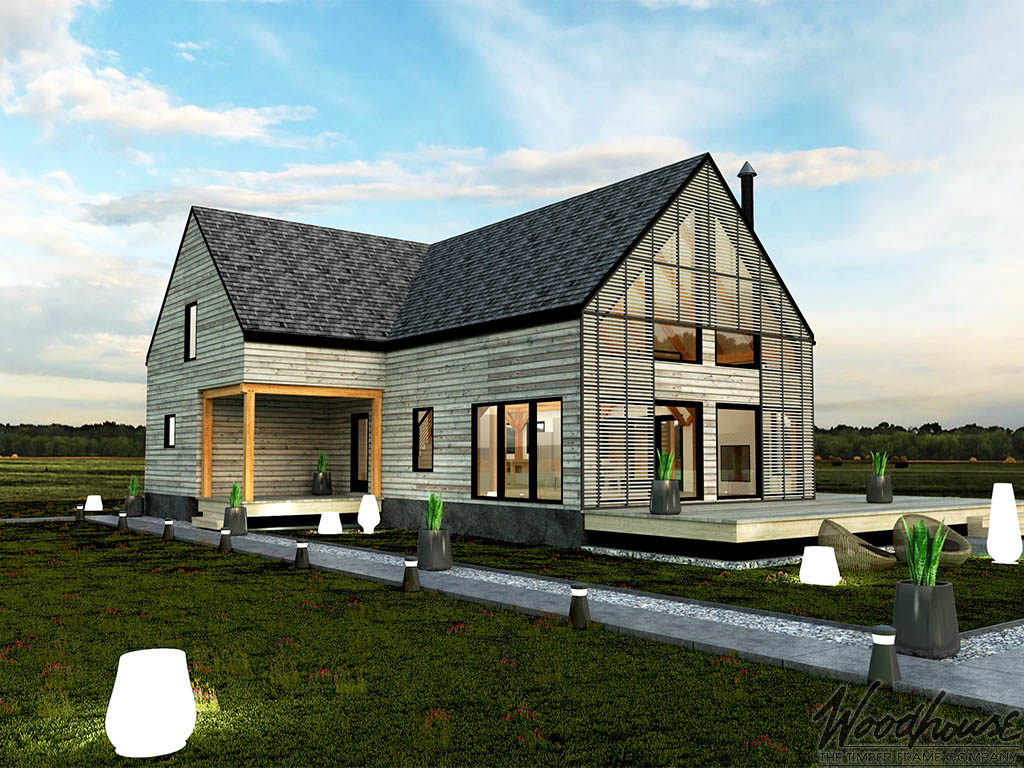
Modern Farmhouse: Open and uncluttered, the understated beauty of the Hanford V1 deck design fuses timelessness with contemporary style.
Are There Structural Considerations?
High-performance decks are built for the job. Timber frame homes are often constructed in places with inclement weather, and deck construction must be durable against high winds and snow loads. Structural considerations also include smaller details like:
- Overhangs to protect you (and your home’s walls) from the sun or snow sliding from the roof
- Wind screens, such as strategic walls or a paneled railing system, for wind protection
- Steps or ramps (where accessibility is a priority) that connect the deck(s) to the house
What About Decking Material?
Decking material plays a major role in a deck’s longevity—and ultimately, how much you’ll enjoy it over time. When selecting materials, it’s important to consider the environmental factors your deck faces day in and day out: rain, snow, ice, and brutal UV rays. Each of these can affect performance and durability. But they also affect comfort. Wet or icy conditions can make your deck slippery, and UV rays can create piping-hot surfaces. Today’s most popular decking materials tackle many of these problems. Here are a few of the common options you’re likely to encounter when shopping for materials:
- Hardwoods (like ipe) are praised for their durability.
- Pressure-treated lumber is a budget-friendly pick.
- Composite decking mimics the look of wood effectively and is lower maintenance than full-wood options.
In some cases, non-wood materials may be a good fit. Depending on your home’s design and the property’s topography, concrete or stone can offer durability and a distinctive aesthetic. For example, the modern StreamRock design (above) features a terraced concrete deck that creates a sleek, contemporary outdoor space.
- Concrete is low maintenance and can be cost effective compared to some premium alternatives.
- Stone can offer both durability and distinctive visual appeal.
When Are Deck Railings Required?
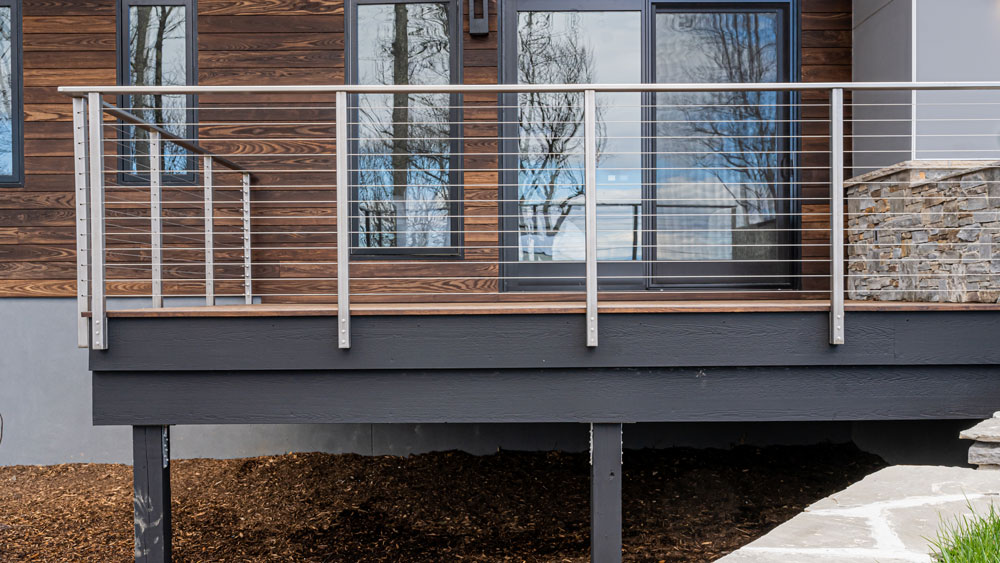
Another critical element for many decks is railings, for both safety and style. As you’ve seen in this post, not all deck spaces will call for them — like the ground-level deck seen in the StreamRock plan earlier. However, most building codes require railings when a deck surface is 30 inches above grade or more. Of course, local codes will vary, so this is something your design team will help you navigate. Common railing materials include wood or composite to echo the warmth of the timbers, metal for a customizable look, or glass and cable systems for a more contemporary feel.
Looking for Deck Design Ideas?
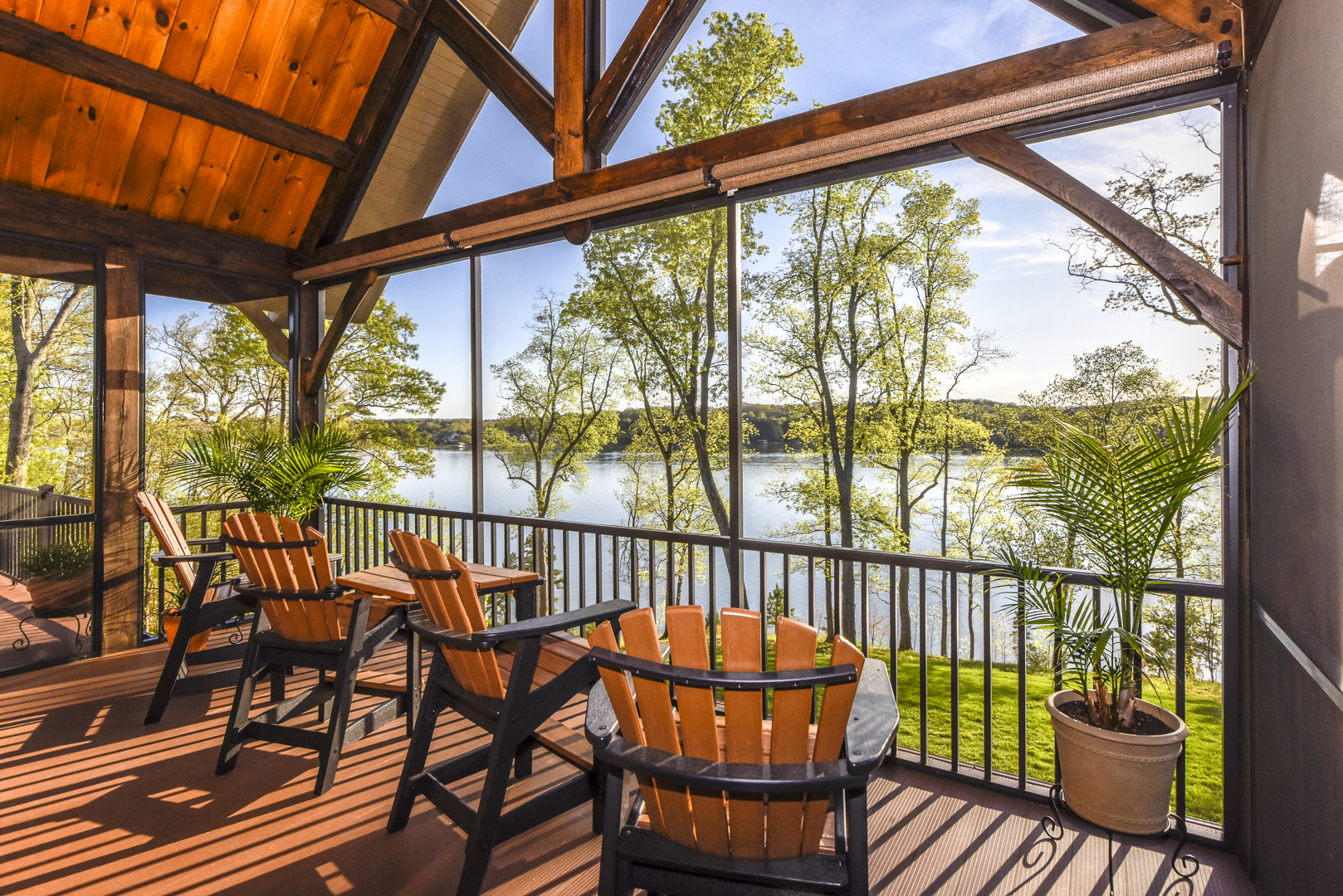
Explore our online gallery to see successful and inspiring timber frame homes with all kinds of creative deck designs. Contact us and start a friendly conversation.
Meet the Experts
This post was reviewed by Pat Seaman. Pat is the owner and CEO of Woodhouse, The Timber Frame Company. He has personally built seven timber frame homes and has been involved in many hundreds of timber frame projects over the last 22 years.


