“There’s power at the road.”
For someone considering a beautiful piece of rural land, those words can sound reassuring. The property may already feel like the right place for the home. There is privacy, perhaps a mountain or lake view, and enough acreage to choose where the house should sit. If electricity is nearby, it can be easy to assume the utility question is mostly settled.
But having utilities somewhere near a rural property and understanding what it will take to serve a custom home are two different things. How far is the future homesite from existing power? Will the property need a well, and what kind of yield can it produce? Where can a septic system go? How do the well, septic field, driveway, home, and outdoor spaces fit together? And is the internet service shown as “available” actually adequate at this particular location?
These are questions worth answering before design progresses too far. Woodhouse has been helping families plan custom timber frame homes since 1979. Over those decades, one lesson has remained consistent: utilities are not simply infrastructure added after the house is designed. They can influence where the home belongs on the property, how the site is developed, and which decisions need to be made before construction begins.

What Utilities Do You Need to Build a Home on Rural Land?
Most rural custom homes need solutions for four basic services:
- Water
- Wastewater
- Electrical power
- Internet and communications
Depending on the property, those services may come from municipal infrastructure or private systems such as a well and septic system. The important question is not simply whether each utility is technically available. It is what will be required to bring reliable service to the actual homesite.
Distance, terrain, soil, water conditions, local regulations, utility-provider requirements, and the placement of the home can all affect that answer.
A Well Is About More Than Finding Water
If municipal water is unavailable, the home will typically need a private well. At first, the question seems straightforward: Can we drill a well here? But successful water planning goes beyond whether groundwater can be reached.
Well Yield Matters
A well must produce enough water to serve the needs of the home. If the well produces water more slowly than the household is expected to use it, that does not necessarily mean the property cannot support the home. It may mean the water system needs to be designed differently.
For example, a low-yield well may require water storage, such as a cistern, along with a pumping system that allows the well to replenish stored water over time while providing the home with water when it is needed. That is a very different situation from simply drilling a well and connecting it to the house.
Water Quality Matters, Too
Water can be plentiful and still require treatment. Depending on local conditions, naturally occurring minerals or other substances may affect taste, odor, staining, or overall water quality. Conditions such as sulfur and iron, for example, can lead to additional water-treatment considerations.
When evaluating water for a rural custom home, the useful questions become whether the property can provide water, how much it can produce, and what will be necessary to make that water appropriate for the home. Those answers can influence equipment, planning, and the space needed for the home’s water system.
Septic Planning Can Influence Where the Home Goes
If municipal sewer is unavailable, the property will generally require an on-site wastewater solution. The first question often sounds simple: Will the land support a septic system? But the complete answer involves more.
Soil conditions and drainage matter. Local requirements matter. The type of system required matters. And the location of the system has to work in relation to the rest of the property. The home, well, septic area, driveway, outdoor living spaces, and other site elements cannot be planned independently.
Topography Can Complicate Wastewater Planning
On sloped properties, gravity may not always move wastewater where it needs to go. Some sites may require pumping stations to move wastewater between the home and drain field. That adds another layer of equipment, planning, and ongoing system considerations.
This is why “the property passed a perc test” should not necessarily be the end of the conversation. For the homeowner, the more useful question is how the wastewater solution fits with the home and the rest of the site.
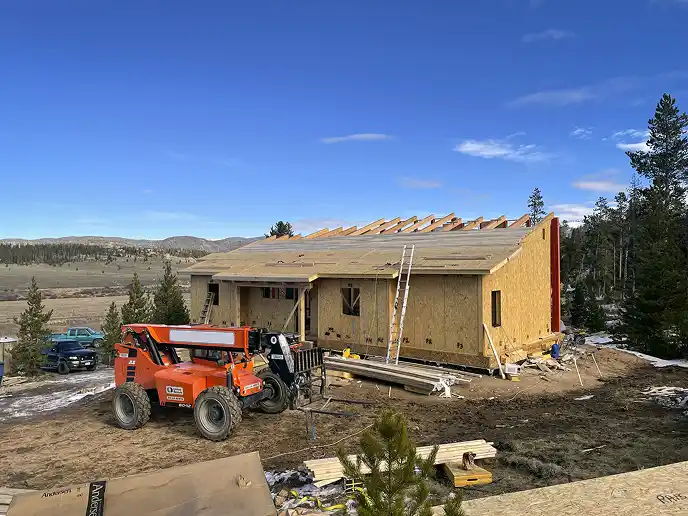
“Power at the Road” Doesn’t Tell You What Power at the House Will Require
Return to that reassuring utility pole. It may be visible from the property entrance, but perhaps the place you want to build is several hundred feet farther into the property. Now distance becomes part of the project.
Bringing electrical service to a rural homesite can involve utility-provider coordination, trenching, conduit, equipment, and other site work. Terrain can affect the work as well. One detail that is particularly easy to overlook on larger rural properties is the length of conduit runs needed to reach the homesite.
The future great room may be positioned exactly where it captures the mountain view, but that same location may also be considerably farther from existing electrical infrastructure. Neither consideration automatically outweighs the other. They simply need to be understood together.
That is the broader principle behind rural utility planning: where you put the house affects what it takes to serve the house.
Internet Is Now Part of Site Due Diligence
Internet access once might have been treated as a lifestyle preference. For many homeowners, that is no longer realistic. Remote work, streaming, security systems, connected-home technology, communications, and everyday household functions can all depend on reliable connectivity.
Rural properties may have access to fiber, cable, fixed wireless, satellite, or other solutions depending on location. But broad service availability does not always answer the question that matters: What service and reliability can I actually expect at this address?
If dependable high-speed internet is important to the way you plan to use the home, investigate it early. This is particularly important for second homes and rural retreats that may also need to function as work-from-home locations for extended periods.
A spectacular view becomes less relaxing when the first video call reveals that the connection does not support the way you expected to live there.
What If Municipal Water and Sewer Are Available?
Rural does not always mean private well and septic. Some properties may have access to municipal water, sewer, or both. That can simplify certain aspects of planning, but available municipal service is not necessarily the same as an existing connection at the homesite.
Questions can include:
- Does the service actually extend to this parcel?
- Where is the connection point?
- What local requirements apply?
- Are connection or impact fees involved?
- How far is the future home from the existing infrastructure?
- What permitting or coordination is required?
These answers are typically confirmed through the appropriate municipality, utility provider, local builder, or other relevant professional. The key is not to make assumptions based on infrastructure simply being nearby.
How Do Utilities Affect Custom Home Design?
This is where utility planning becomes architectural planning.
Imagine that the property gives you two potential locations for the home. The first has the most dramatic view. The second provides easier access to electrical infrastructure, works more naturally with the septic location, and requires less site development.
Which is the right choice? There is no universal answer. Perhaps the view is important enough to justify the additional site and utility work. Or perhaps moving the house slightly creates nearly the same experience while simplifying other aspects of the project. Those are exactly the kinds of tradeoffs that should be explored while the home and site are being considered together.
Woodhouse’s in-house design and architectural team can consider the relationship among the home, property, views, lifestyle goals, and known site conditions as a timber frame home design develops. When an outside architect is involved, Woodhouse can collaborate with that architect as part of the project team.
Local builders and the appropriate utility, well, septic, engineering, and permitting professionals bring the site-specific expertise needed to determine how those systems can actually be provided. The strongest planning happens when those perspectives inform one another.

What Makes Bringing Utilities to Rural Land More Complicated?
Two properties can appear remarkably similar and require very different utility solutions.
Some of the biggest variables include:
- Distance from existing infrastructure
- Terrain and elevation changes
- Soil and drainage conditions
- Well depth, yield, and water quality
- Septic-system requirements
- Distance between the road and homesite
- Local permitting and regulations
- Municipal or utility-provider requirements
- Site access
- The location ultimately chosen for the home
This is why it is difficult to answer questions such as “How much does it cost to bring utilities to land?” with one meaningful national number.
A short electrical run across manageable terrain is fundamentally different from bringing service deep into a large rural parcel. A conventional septic solution on a straightforward site is different from one requiring a more complex engineered approach. A productive well with good water quality creates a different set of needs from a low-yield well requiring storage and treatment.
For planning purposes, understanding what drives the cost is often more useful than relying on a broad range that may have little relationship to your particular property.
Should You Investigate Utilities Before Buying Rural Land?
Ideally, utility questions should begin before you purchase a property, or at least before you assume that the land can support your project in the way you envision. That does not mean every utility must be fully engineered before you make an offer. It means identifying the important unknowns.
Questions worth investigating include:
- If municipal water is unavailable, what is known about wells in the area?
- If sewer is unavailable, what does the property require for wastewater?
- Where is electrical infrastructure?
- What internet options actually serve the location?
- Do the likely utility solutions create constraints on where the home can go?
These questions belong alongside access, topography, zoning, soil, and other land due-diligence considerations. A property may still be exactly right even when the answers reveal additional complexity. The difference is that you are choosing that complexity knowingly.
Who Determines What Utilities a Rural Property Needs?
Utility planning is a team effort because different questions require different expertise.
Depending on the property, the conversation may involve:
- Well professionals
- Septic and soil professionals
- Utility providers
- Local authorities
- Engineers
- Surveyors
- A qualified local custom builder
- The home design and architectural team
Woodhouse does not replace those local professionals or determine site-specific utility feasibility. Instead, Woodhouse can help homeowners consider how known site and utility conditions relate to timber frame home design, home placement, building-system planning, delivery, and the broader project.
A local builder can also be particularly valuable because that builder understands the realities of developing a property in that market and coordinates much of the locally performed construction.
Getting those conversations started early is far more useful than discovering a major utility constraint after the home has already been designed around assumptions that turn out not to be true.
Plan the Home and the Property Together
Building on rural land offers extraordinary opportunities, from greater privacy and expansive views to the freedom to create a home that truly fits the way you want to live. But making the most of those opportunities requires looking beyond the homesite itself. Water, wastewater, electricity, and connectivity all play a role in how the property can be developed and where the home ultimately belongs.
The goal is not to let utility requirements dictate your vision. It is to understand them early enough that your home’s architecture, placement, and supporting infrastructure can be planned together. With the right professionals involved and a clear understanding of the property’s conditions, even challenging rural sites can offer compelling possibilities.
Woodhouse’s in-house design and architectural team can help you explore those possibilities through customizable timber frame pre-designs or a fully custom home. Whether you’re planning a mountain retreat, a lakeside residence, or a year-round family home, exploring floor plans is a practical way to begin defining what your future property needs to support.

Frequently Asked Questions About Utilities for Rural Land
What utilities do I need to build a house on rural land?
Most rural homes require water, wastewater management, electrical power, and internet or communications service. Depending on the property, water and wastewater may be provided through a private well and septic system rather than municipal infrastructure.
Can you build a house without municipal water or sewer?
Yes. Many rural custom homes use private wells and septic systems. The property needs to be evaluated to determine whether appropriate water and wastewater solutions are feasible for that specific site.
What happens if a well has low water yield?
A low-yield well may require a system that stores water as the well produces it and then supplies the home from that stored reserve. The appropriate solution depends on site-specific conditions and should be determined by qualified professionals.
How does slope affect a septic system?
Topography can influence septic placement and how wastewater moves between the home and drain field. On some sloped sites, pumping equipment may be required rather than relying entirely on gravity.
How do you get electricity to a rural homesite?
The process depends on the location of existing electrical infrastructure, the distance to the homesite, terrain, utility-provider requirements, and how service will be installed. Long trenching and conduit runs can make seemingly nearby power more involved to reach.
How much does it cost to bring utilities to rural land?
There is no single reliable figure because well, septic, electricity, municipal connections, and other utility costs depend heavily on distance, terrain, soil, system requirements, local regulations, and the property itself. Evaluating those factors for the specific site provides a more useful planning picture.