
Discover how radiant heated floors provide the perfect warmth for timber frame homes, delivering a daily luxury that is both accessible and practical.

By SKphoto / Adobe Stock
When the snow swirls and temperatures drop, bare floors, especially those made of tile or concrete, greet your feet with a bracing chill. In contrast, a radiant heated floor feels like a tiny bit of sunshine underfoot. More homeowners are making radiant heat a requisite for their custom timber frame design — whether a modern mountain home plan or a farmhouse on the plains. Step into the basics of radiant heat, and discover why people have warmed up to this favorite floor feature.
What is Radiant Heat?
If you’ve ever sat in front of a crackling fire and snuggled into the warmth emanating from its flames, you’ve experienced the comfort of radiant heat. Unlike convection, which blows hot air into a space, radiant heat is the gentle transfer of heat from a hot or warm surface into the surrounding space. When this concept is applied to floors, the result is comfortable, consistent temperatures. Radiant floor heating systems operate by warming the floor surface, which then radiates into the room. Radiant heat can also be used in the walls to supplement flooring systems.
There are two types of radiant heat systems: electric and hydronic. Electric systems use electric cables or heating mats. Hydronic or water-based systems circulate heated water through pipes located under the floor.
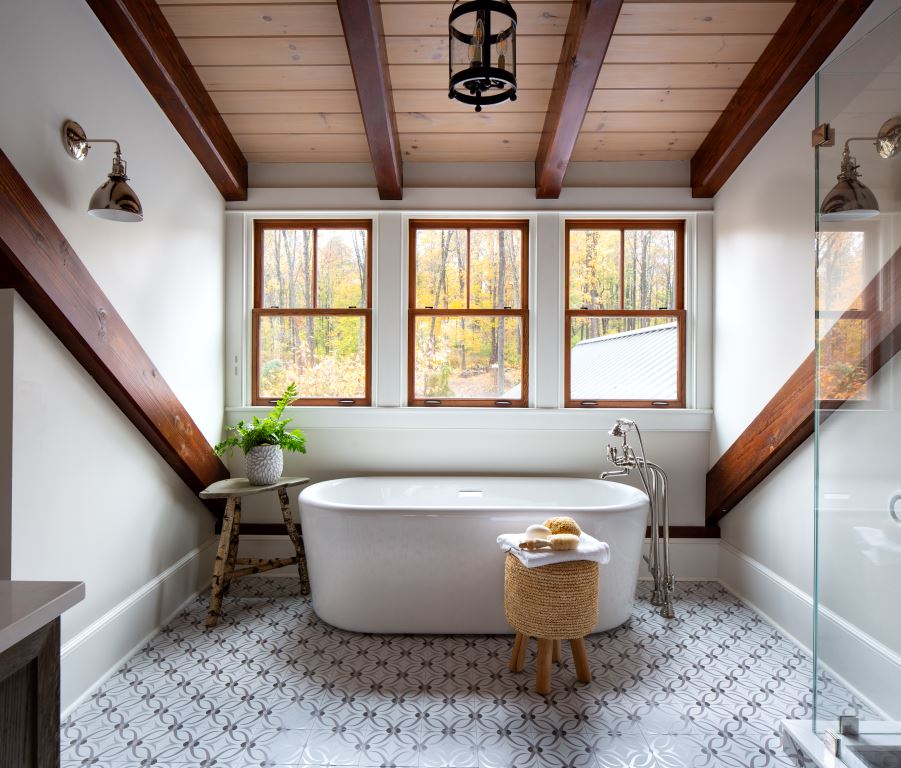
A German-made, wood-fired boiler provides in-floor radiant heat to this entire home in New York.
Can Radiant Heat Work for the Entire House?
In the right scenario, radiant heated floors are an effective alternative to convection heat for whole-house comfort. There are, however, environmental and construction considerations.
The colder the climate, the tighter a home’s thermal envelope must be to prevent heat loss. Woodhouse timber frame homes are perfect candidates because they are built with structural insulated panels (SIPs) and are both designed and oriented to optimize passive solar heating.
While you can’t see radiant heat in action, you can check out two mountain homes that utilize full-house radiant heat systems; this one in Steamboat, CO, and this one in New York’s Catskill Mountains. Modern mountain home plans, coastal, and other mountain styles, are a natural fit for radiant floors.
Radiant heat systems are not an all-or-nothing affair. You can use them throughout the entire home or in just a few key rooms. Create regal luxury for spa-like bathrooms, calming kitchens, enclosed outdoor rooms, and even an inviting office.

It only makes sense that this Colorado home, perched on Steamboat Spring’s ski slopes, is warmed by radiant heat via Warmboard underlayment.
What are the Pros and Cons of Radiant Heat?
Many people prefer radiant heat over forced air for an array of reasons:
- No cold spots. Radiant heat warms the floor surface, which then spreads into the room, maintaining a consistent temperature.
- Silence and serenity. There are no fans or blowing air.
- Consistent humidity levels. Forced air systems blow dust and dry out indoor air (and your skin); issues that are not a concern with radiant heated floors.
- Less work. Without ducts to clean annually or a furnace to worry about, radiant heat systems are an excellent way to achieve a low-maintenance home.
- Toasty toes. While sitting on the couch or floor, a heated floor swaddles your feet in cozy comfort, amping up a blanket’s warmth … something forced air will never achieve.
- Reduced allergens. With radiant heating, there’s no blowing air to kick up and blow allergens around, as with forced-air systems.
However, there are some disadvantages to radiant heat:
- Initially expensive. Compared to forced air, radiant heat systems have more complex components and require specialized installation, but are more energy-efficient overall.
- Difficult to repair. If something goes wrong, replacing a faulty component under the floor can be tricky.
- Response time. Radiant heat is not instantaneous and takes time to reach full effectiveness. In climates with dramatic day-to-night or seasonal swings—especially during spring and fall—this slower response can feel less flexible. A sudden warm afternoon or cold front may outpace the system’s ability to adjust in real time. Depending on room size, system type, and floor materials, radiant heating can take anywhere from 20 minutes to several hours to noticeably warm a space.
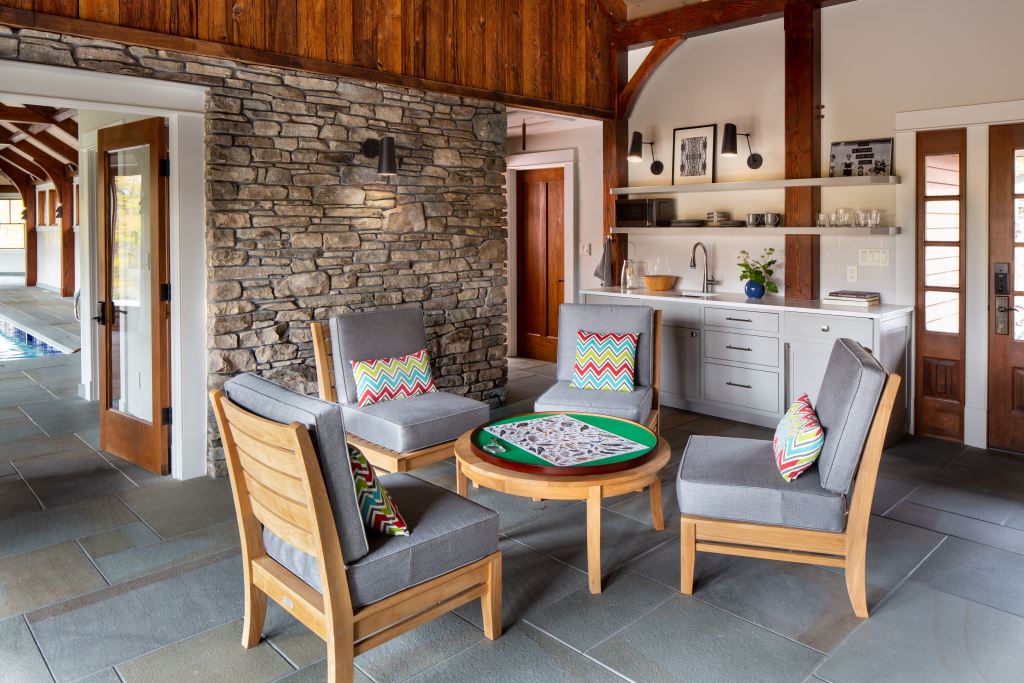
Radiant in-floor heating extends into this New York home’s pool and spa.
Which Types of Flooring Work Well with Radiant Heat?
Radiant heat systems are compatible with many types of floors, but some are better than others. Tile, stone, terrazzo, and concrete, which are notoriously icy underfoot during cold snaps, are ideal candidates. Ceramic tiles, due to their thin structure and excellent heat conduction properties, are particularly well-suited.
Carpeted flooring and solid hardwood floors are not ideal. Wood is an organic material and prone to warping or shrinking when exposed to heat. Engineered hardwood is a suitable alternative.
Is Radiant Heat a Good Fit for You?
Does an envelope of snuggly warmth after a day on the slopes or brisk trails sound dreamy? Radiant heat is for you. In fact, it’s for anyone seeking a touch of luxe in their modern mountain home plans or cold-climate timber frame abode.
Explore our online gallery of modern mountain floor plans, cabins, barn homes, and other timber frame designs, all of which are compatible with radiant heat systems. Have questions? Contact us today.
Meet the Experts
This post was reviewed by Patrick Seaman. Pat is the owner and CEO of Woodhouse, The Timber Frame Company. He has personally built 7 timber frame homes and has been involved in many hundreds of timber frame projects over the last 22 years.


