From basic terminology to modern upgrades, here’s what homeowners should know about plumbing in today’s timber frame homes.
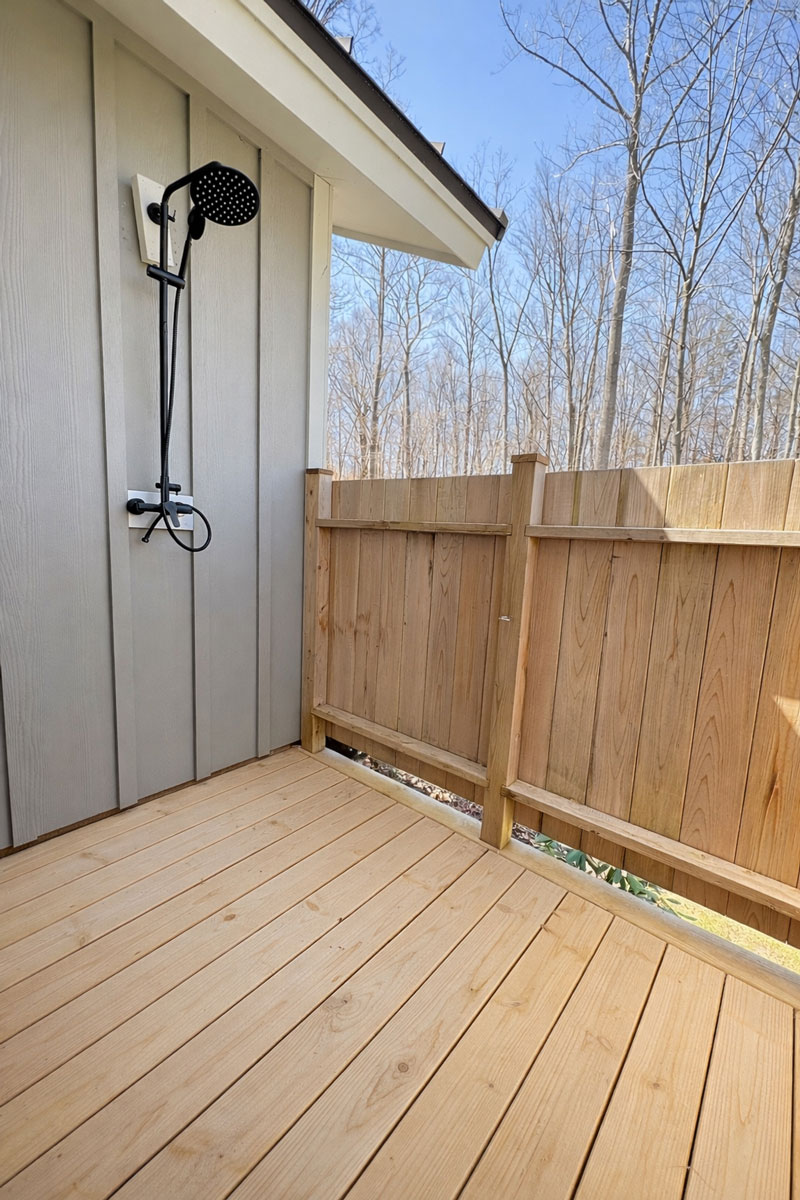
Table of Contents
How Does Plumbing Differ Between Timber Frame and Conventional Homes?
Why Plan Early for Plumbing in Timber Frame Homes?
What Are Some Exciting Plumbing Innovations?
When it comes to a custom, luxury timber frame home, lifestyle (and location, of course!) drives much of the design. But it’s really the infrastructure behind that design that makes those luxury lifestyle upgrades possible.
Take plumbing for example. State-of-the-art plumbing introduces the opportunity for a chef’s kitchen, spa-like bathroom, a dog-wash station, or an outdoor shower. Plumbing like this requires careful planning and consideration. And while you, the client, don’t need to become an expert yourself, many find it reassuring — and even exciting — to know what’s going on behind the scenes in their dream home design.
Ready to learn more? With this guide, we’ll explore how plumbing differs between timber frame and conventional homes, why early planning is critical, and what plumbing innovations elevate comfort, efficiency, and resilience.
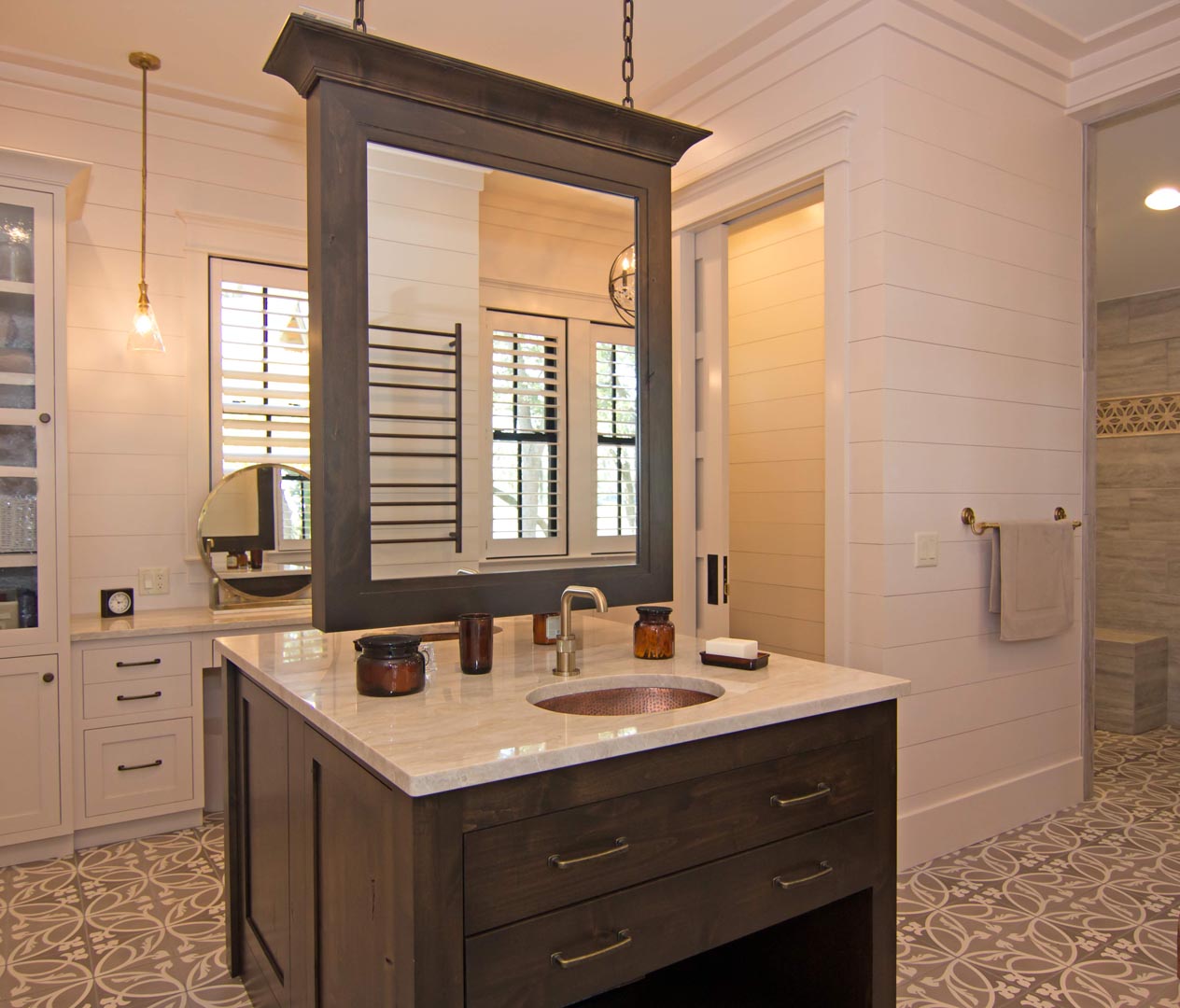
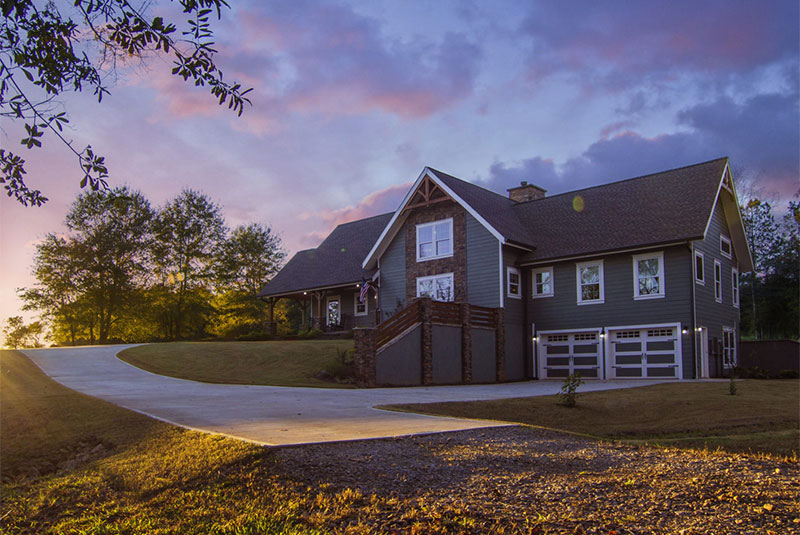
See more of this elegant Low Country home here.
How Does Plumbing Differ Between Timber Frame and Conventional Homes?
Making the transition from a conventionally framed home to a timber frame is an exciting move. With it come some fundamental differences that affect plumbing infrastructure.
Solid vs. Open Wall Cavities
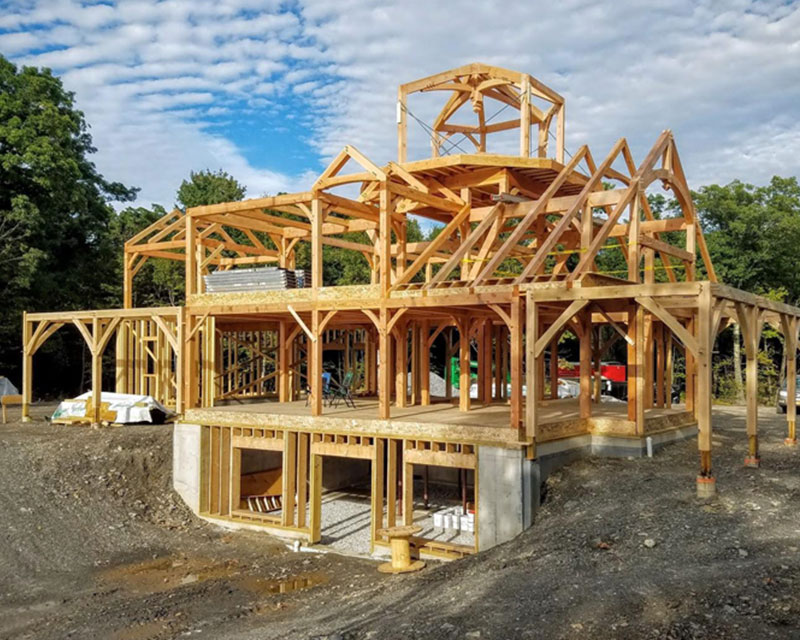
If you could peer inside the exterior walls of Woodhouse timber frame homes and those of traditional “stick” homes, you would see a glaring difference. The Woodhouse timber frame construction system uses structural insulated panels (SIPs). SIPs have a solid core, as opposed to the airy and penetrable fiberglass insulation commonly used in stick-built construction systems.
This changes the way plumbing is run through the home.
“In the early days—and still to some degree, like a kitchen sink on an exterior wall—a stick home can run the plumbing up that short portion of the wall and come in through the back of the cabinet,” explains Woodhouse Southeast Regional Project Manager, Don Downs. “With SIPs, pipes are brought up through the floor.”
By keeping plumbing lines inside the conditioned space rather than within exterior wall cavities, the system offers added protection against freezing temperatures and supports the long-term durability of the home’s plumbing infrastructure.
Remote Locations
For many homeowners, their timber frame is a legacy home, representing a lifelong goal of moving to their slice of paradise. These homes are often built in remote and inspiring locales: mountains, beaches, and lakes.
Rural locations like these often lack access to municipal utility lines. Homeowners need to factor in septic systems. These systems require careful installation, planning, and maintenance, which should be factored into a homeowner’s budget.
Complex Layouts
As with any home, plumbing for special features, like open floor plans, spacious great rooms, grand kitchens, and airy lofts, will require some planning. Kitchen islands with sinks need special vent valves. Upper-floor bathrooms require a cavity below the roof or floor to run pipes. Outdoor showers must be placed and built strategically.
So go ahead and dream big. When Woodhouse designs a floor plan for your perfect lifestyle, it includes the details that support it.
“Whatever the plumbing requirement may be, Woodhouse has the experience to make it happen,” Don explains.
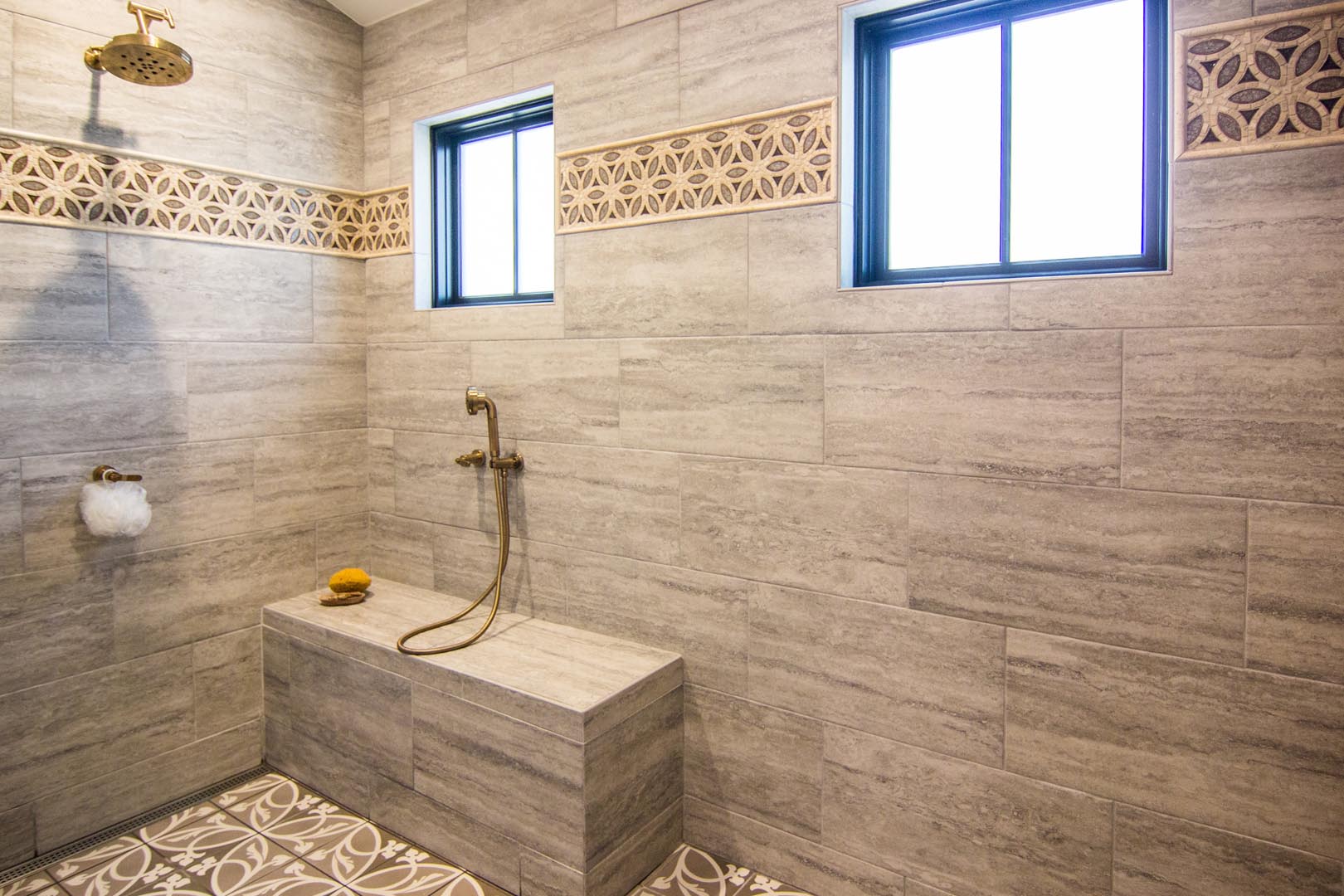
See more of this bathroom here.
Why Plan Early for Plumbing in Timber Frame Homes?
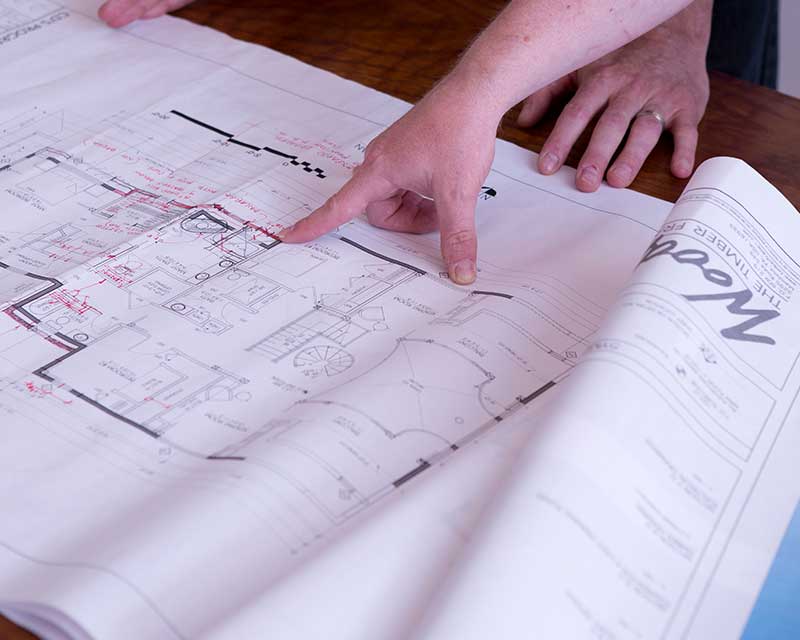
Early planning for pipe routing and the mechanical room helps integrate these elements into the design process and budget efficiently, avoiding costly surprises down the road. Floor plans can also be designed to accommodate future renovations and upgrades, like finishing the basement or guest suite above the garage, eliminating the need to open up walls or ceilings to run pipes later on down the road.
Materials: Copper vs. PEX
Copper pipe has long been prized for its durability, but a flexible, plastic tubing known as PEX is gaining popularity as an affordable alternative. Both come with their own pros and cons — what’s right for your project will ultimately depend on your budget and location.
Copper: This time-tested material typically lasts longer than PEX and has higher heat tolerance, making it a smart choice in places where the pipes will be exposed to UV radiation or high temperatures. However, it can be susceptible to corrosion in locations with hard water and ultimately is a more expensive choice.
PEX: This newer solution generally costs less than copper, and, due to its flexibility, can be easier to install and often requires less fittings, meaning less places for leaks to start. It’s highly corrosion-resistant and can expand when water freezes, so it reduces the risk of burst pipes. However, PEX may not last as long as copper and is susceptible to rodents.
What Are Some Exciting Plumbing Innovations?
At one point, when it came to plumbing, hot water and toilets were exciting and new. Innovations in plumbing have continued to progress from those early days, with sustainability and technology driving an array of modern offerings. Here are a few:
-
- Digital Showers. Instead of guesstimating water flow and temperature with a handle, a digital shower provides precision control, minimizing water waste and maximizing comfort.
-
- Graywater/Rainwater Integration. Capturing rainwater or wastewater from non-toilet sources, filtering it, and rerouting it for exterior irrigation is an exceptionally effective way to minimize waste of this precious resource. In regions where drought, water restrictions, or sustainability goals matter, this can help make the home more environmentally resilient.
-
- Touchless Faucets. No more touching a faucet handle with dirty hands or needlessly letting water flow. Just wave your hand in front of the sensor for easy control that reduces water waste and improves hygiene.
-
- Water-Usage Tracking. A smart home water meter sends real-time usage data, alerts, and history to an app on your phone so you can accurately measure your water consumption and patterns of use. Smart monitoring like this gives homeowners visibility they’ve never had before — making it easier to spot leaks, identify wasteful patterns, and protect against costly water damage.
-
- Whole-Home Filtration. Large-scale filtration systems ensure water quality at every fixture, not just at the kitchen sink, offering peace of mind and better health.

Tour the rest of this home here.
Explore More
Find endless inspiration by checking out our gallery of customizable floor plans. Or, contact us to see how we can make your dream home possible.
Meet the Experts
Don Downs contributed to this post. Don is the Regional Project Manager for the southeastern United States for Woodhouse, The Timber Frame Company and has been either fabricating timber frame structures or managing timber frame projects for over 30 years.