Here’s how timber frame homes deliver the warmth of wood architecture with less maintenance demands than traditional log construction.

This Woodhouse home on Deep Creek Lake in Maryland achieves the charm of log construction (without the maintenance) by using concrete-log siding. See more here.
All homes require maintenance. Roofs age, mechanical systems require servicing, and materials naturally wear over time. But when comparing the maintenance needs of a timber frame vs. a log home, there is a key distinction that matters for wise buyers: Timber frame construction offers all the warmth of wood with less of the maintenance burdens of a log home.
Exposure to Elements
Log homes and timber homes both require dutiful exterior maintenance. In particular, it’s critical to wash any exterior wood elements after heavy pollen seasons. However, a log home typically does have more exposed wood on the exterior, which, due to constant exposure to sun, wind, and rain, calls for regular staining, sealing, chinking repair, and monitoring for cracking as the logs move over time.
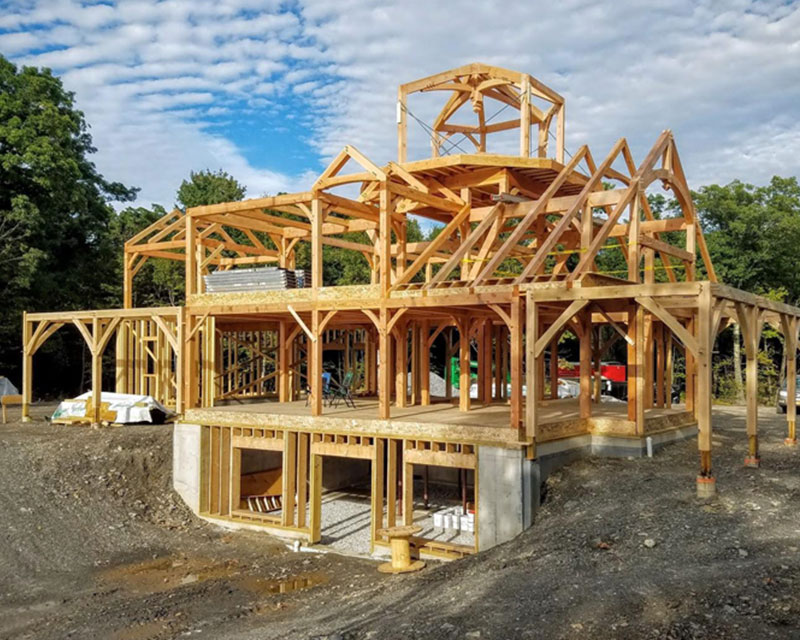
In a timber frame home, the majority of timbers are protected within the building envelope. However, exterior timbers require regular inspection and maintenance of their own. In particular, timbers on the south and west sides of the house generally require refinishing every two to three years. The north and east sides, however, rarely need refinishing.
Of course, location plays a key role too. Take, for example, the unrelenting sun in the Southwest or heavy snow loads in the Northeast—these all influence a home’s associated upkeep and long-term durability, no matter the construction style.
One key difference that sets Woodhouse apart is our warranty. Many log home manufacturers require annual washing and refinishing to stay within their warranty. Woodhouse does not, and we offer the industry’s only transferable lifetime warranty.

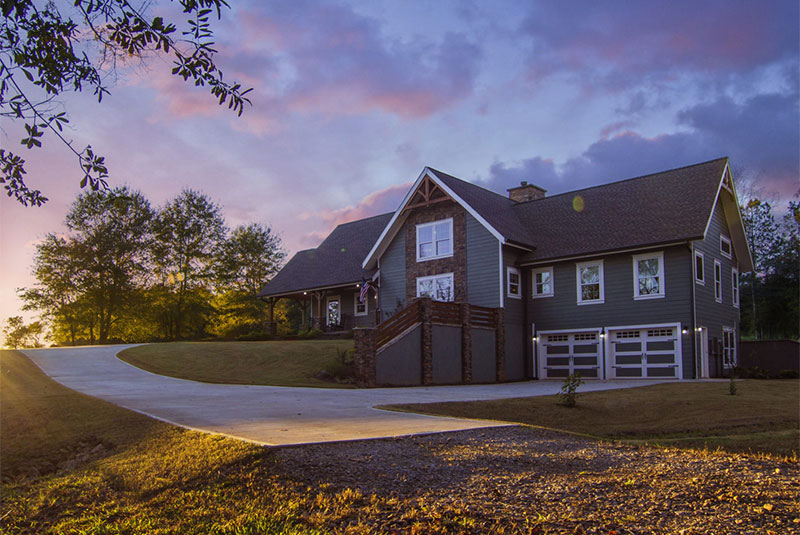
See more of this woodsy home here.
Interior Maintenance
Inside the home, interior logs and timbers typically require occasional dusting. (Note: Some homeowners may find reclaimed and rough-textured logs and timbers more difficult to clean.) Over many years, some finishes may benefit from occasional refreshing but, overall, care is infrequent and straightforward. The wood becomes part of the home’s long-term character, aging gracefully.
Shrinking and Settling
One of the most notable differences between log and timber home longevity lies in the way logs shrink and settle as they dry. Whether in a timber frame or a wall of stacked logs, wood members will shrink as they dry (about ¼ of an inch for an 8-inch log). This means that a 9-foot log wall can (and will) shrink about 3 to 4 inches over time. This shrinkage can have significant effects on windows, doors, cabinets, and more. Of course, the log-home industry has all kinds of methods to accommodate for this in the design stage, but it nonetheless requires vigilance, maintenance, and adjustment over time on the part of the homeowner. Due to the nature of timber frame design, this vulnerability is not something timber frame homeowners have to deal with.
A Lifestyle Difference
When considering a timber frame vs log home, the contrast is that log homes offer rustic appeal but require greater maintenance to preserve them. For a legacy home, in which one hopes to age in place comfortably, this can be a significant burden over time. Timber frame homes offer a similar sense of natural wood beauty but with far fewer demands.
Built for Living, Not Maintaining
A timber frame home from Woodhouse is designed for people who want to enjoy the luxury of their custom home—not constantly maintain it. It offers the warmth of natural wood, the strength of traditional craftsmanship, and the practicality of modern building systems. The result is a home that remains remarkably easy to live in.
Ready to Explore Further?
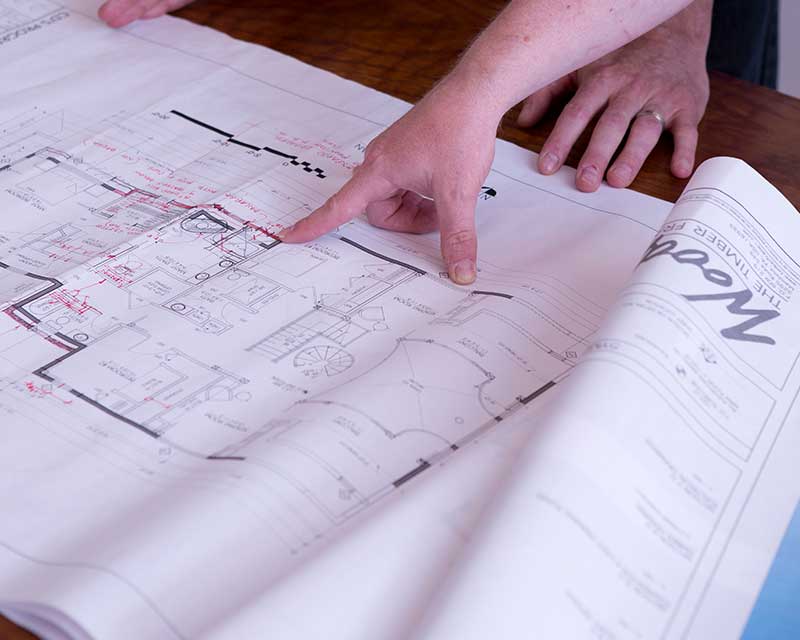
View our galleries or floor plans, or contact us to begin the conversation about your custom timber frame home.
Meet the Experts
This post was reviewed by Dwayne Shell. Dwayne is the Director of Sales and Marketing at Woodhouse, The Timber Frame Company with over 30 years of experience in conventional and manufactured home sales.