From sight lines to indoor-outdoor living, discover how thoughtful layouts transform the way your home feels and functions.
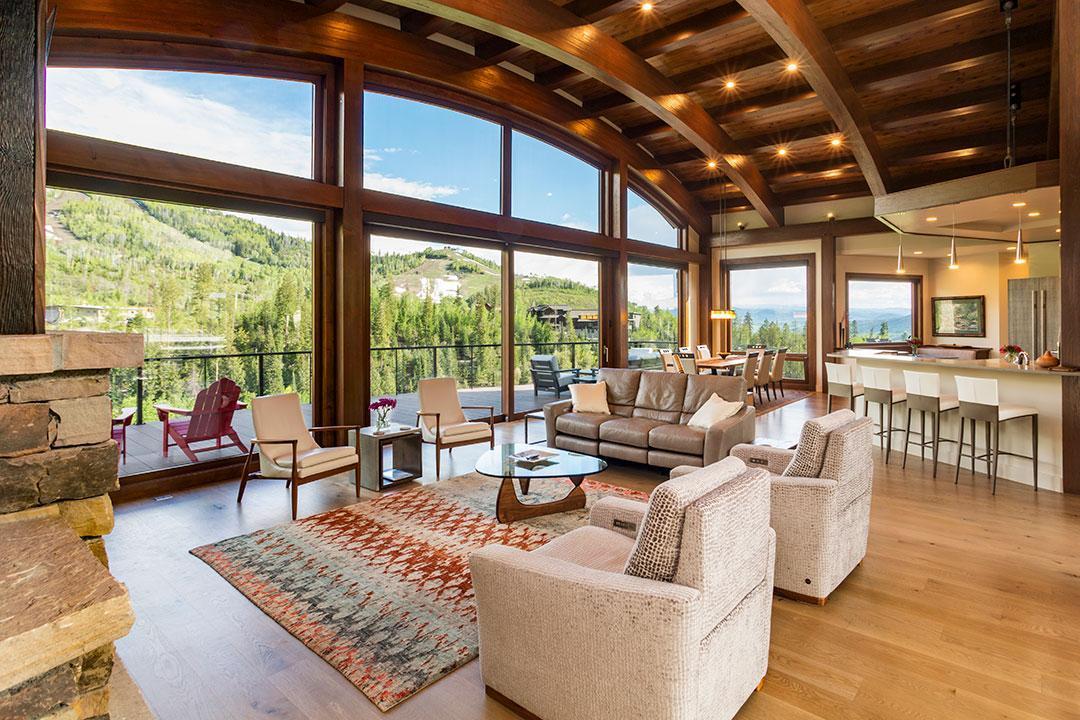
Walk into a well-designed home, and you can feel it immediately. There’s an ease to how the spaces connect, how light moves through the rooms, and how naturally one area leads to the next.
This sense of “flow” is about more than movement — it’s how a home responds to routines, frames moments with family, accommodates work and leisure, and encourages connection with nature. In a well-designed timber frame home, every step feels intentional.
The best timber frame floor plans guide movement, frame experiences, and create meaningful connections between people and place—often without the homeowner ever noticing why it works so well. In this post, we’ll explore five essential tips for creating a home that flows beautifully.
1. Circulation
A home’s circulation path should support daily routines: the mudroom flows into the kitchen; the garage connects to storage; blind corners and awkward turns are minimized or eliminated. Navigation should feel effortless.
In timber frame homes, open layouts enhance these natural movement patterns, allowing residents to move freely between spaces without disruption.
Picture this: you enter the home and are drawn directly into a central great room, with the kitchen just beyond. Each space is connected in a way that creates a smooth, uninterrupted flow. Plans like Adirondack Cottage and TimberRidge use a central great room to anchor the layout, with kitchen and entry spaces arranged naturally around it. These examples highlight how timber framing house plans can optimize both movement and connection between living spaces.
2. Sight Lines
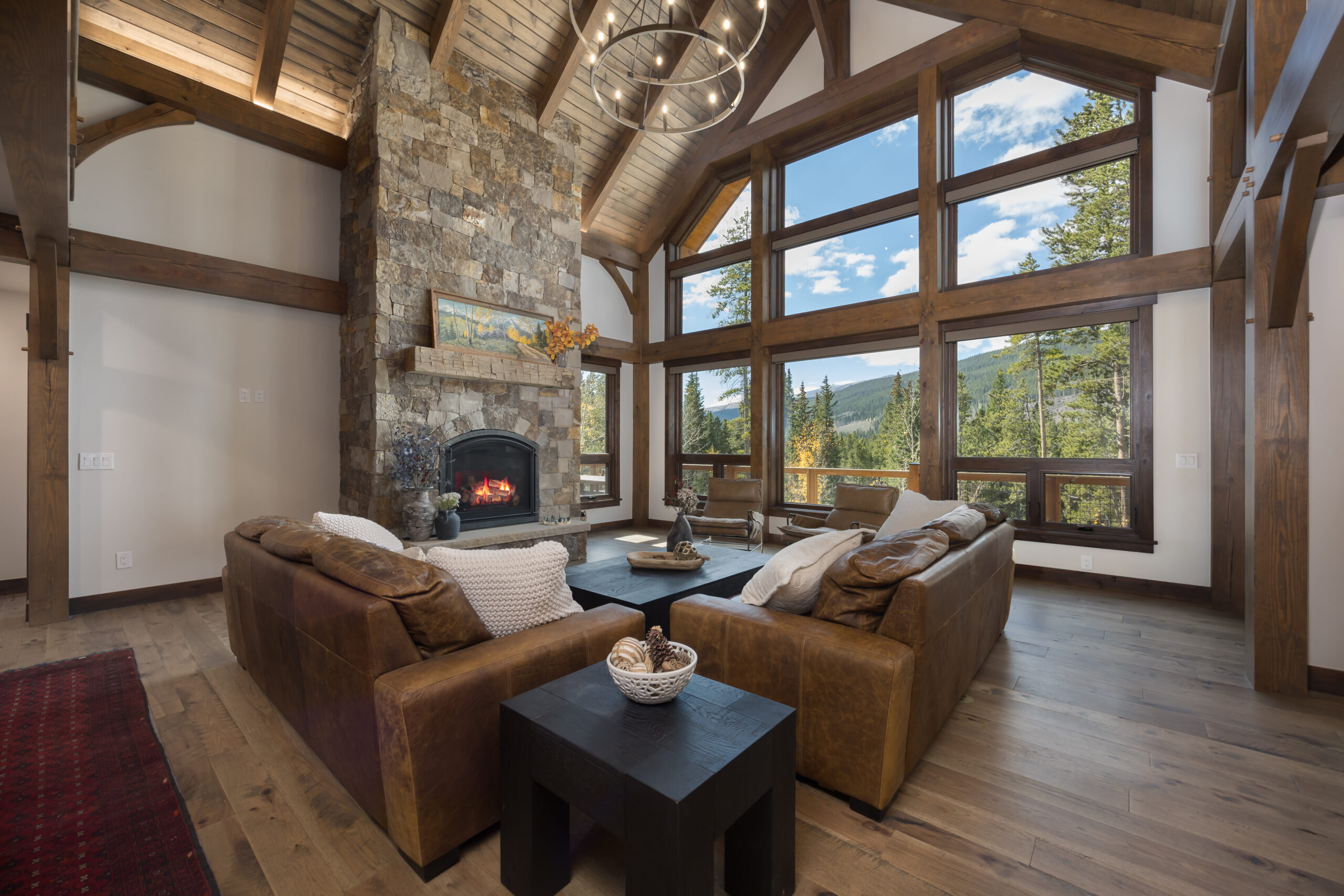
Large windows draw the eye to the striking Rocky Mountain landscape just beyond in this Colorado timber frame home.
What you see when you move through a home shapes how it feels. Long sight lines create a sense of openness and calm, while also improving orientation within the home. Timber frame construction enhances this effect through exposed beams, subtly guiding the eye.
Large windows and open gathering areas reduce visual clutter while framing views of the surrounding landscape, whether that’s mountains, water, or wooded property. In designs like the GreatCamp or LakeView, expansive great rooms are oriented toward large window walls, creating long sight lines that draw the eye outward to their natural surroundings.
3. Privacy
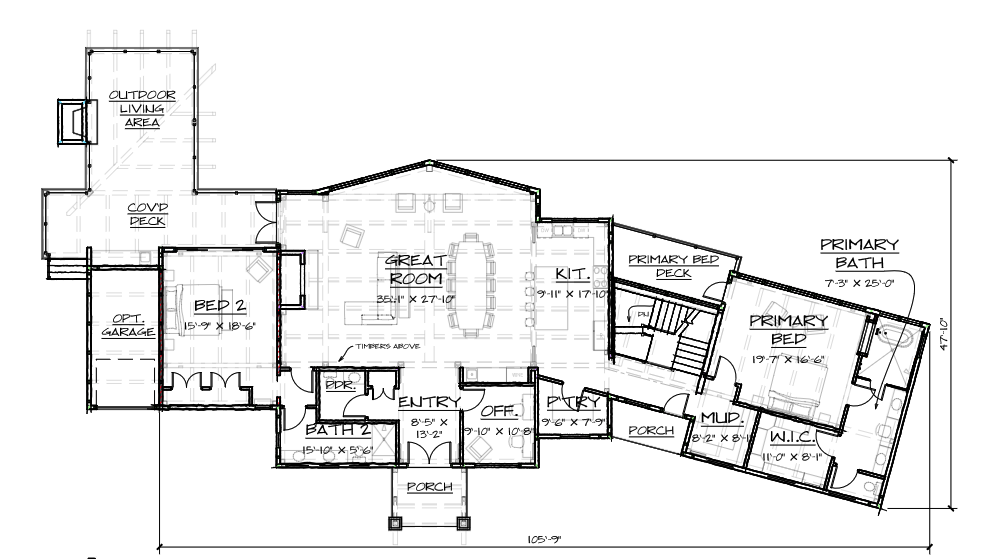
The ChannelRock. See more here.
Good flow isn’t just physical; it’s psychological. While the kitchen and great room often anchor the main living area, the rest of the home should create a clear distinction between social and private zones. Bedrooms, offices, and quiet retreats should feel intentionally set apart.
Transitional spaces, like hallways and staircases, help signal these shifts. They create subtle boundaries without disrupting overall flow. For example, a primary suite should feel connected for convenience, yet removed enough to provide a sense of retreat.
This balance is achieved in Woodhouse plans like the ChannelRock, where bedroom suites and private zones are distinct from main living spaces.
4. Connection to the Outdoors

The BaliView. See more here.
Biophilic design centers on the idea that people thrive when connected to nature; timber frame homes are uniquely suited to achieve this. Natural materials like wood and stone, expansive glass, and intentional use of light all contribute to this connection. Features like covered porches, outdoor fireplaces, and transitional spaces extend living beyond the home’s walls.
When a property offers incredible views, the layout should respond accordingly, often orienting the entire home around that focal point and incorporating spaces to take it all in. Plans like the South Peak, BaliView, and others emphasize outdoor living with wraparound decks, covered porches, and large openings that extend interior spaces into the landscape.
5. Zoning
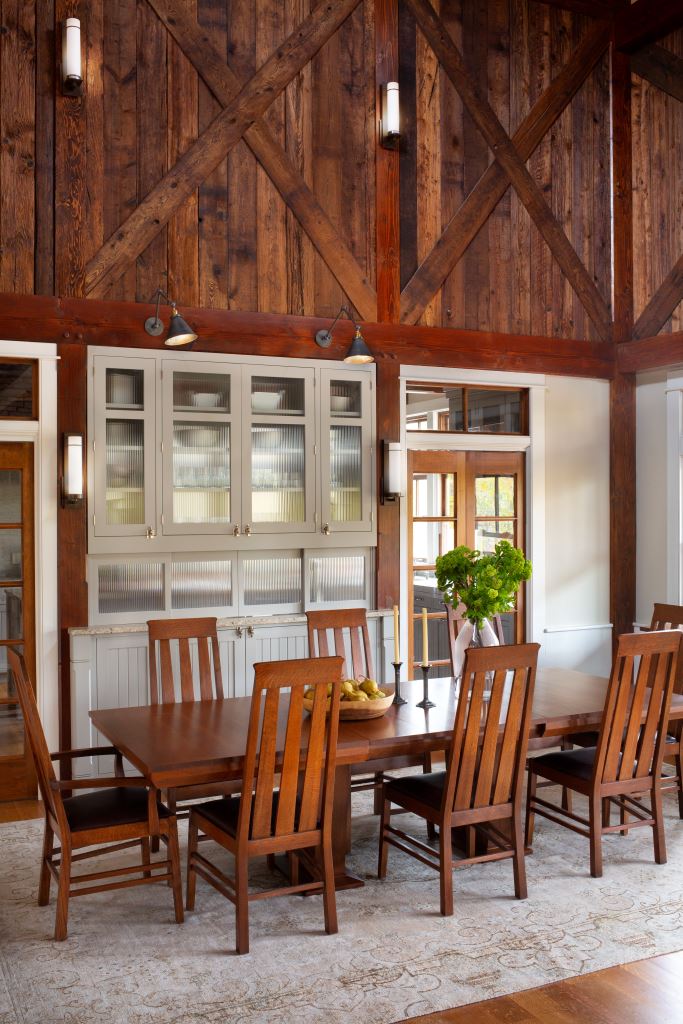
The use of intentional “zoning” brings together form and function in a meaningful way. Some homeowners prefer informal, open layouts where spaces blend seamlessly together. Others lean toward more defined rooms with clear separations between living, dining, and kitchen areas.
Beyond shared spaces, designated zones for work, storage, and daily tasks improve efficiency and organization. Home offices, drop zones, and flexible-use rooms support modern lifestyles—especially as remote work becomes more common.
In Woodhouse plans like the WhisperingPinesV2 or Woodhouse’s contemporary Rock Series—CreekRock, RiverRock, WaterRock, StreamRock, and ChannelRock—dedicated zones for work, storage, and daily routines are thoughtfully integrated. This supports modern lifestyles without disrupting the home’s overall flow.
Enter Flow State
Woodhouse works with customers to tailor their unique home design; start from scratch, or explore our selection of timber framing house plans to get your ideas flowing. Ready to learn more? Contact Woodhouse to take the first step toward your forever home.
Meet the Experts
Diana Allen is the expert behind many of Woodhouse’s meticulously crafted floor plans. Diana is the staff architect for Woodhouse, The Timberframe Company and has been designing timber frame homes, commercial buildings and equestrian buildings for over 30 years often using passive solar design principles.