
Start at the bottom and learn about the foundations for timber frame homes.
Table of Contents
Part I: Introduction
Part II: Four Common Foundation Methods and Their Pros and Cons
Part III: Other Supporting Elements
Part IV: Water Management
Solid from the ground up, Woodhouse timber frame homes are built to last for generations; a desirable trait that begins with the foundation. When constructed well, this critical underlying component supports the home, keeps it secure and level, and safeguards the homeowner’s investment.
A foundation also applies to your knowledge base. Understanding common foundation methods — and their pros and cons — will give you confidence when discussing and planning what’s right for your home, property, and budget.
What are the Most Common Foundations for Timber Frame Homes?
In any built structure, the strength below impacts the quality of life above. Timber frame homes are typically constructed on one of four common types of foundations. Each comes with its own set of advantages and considerations.
Concrete Blocks
By Del Harper / Adobe Stock
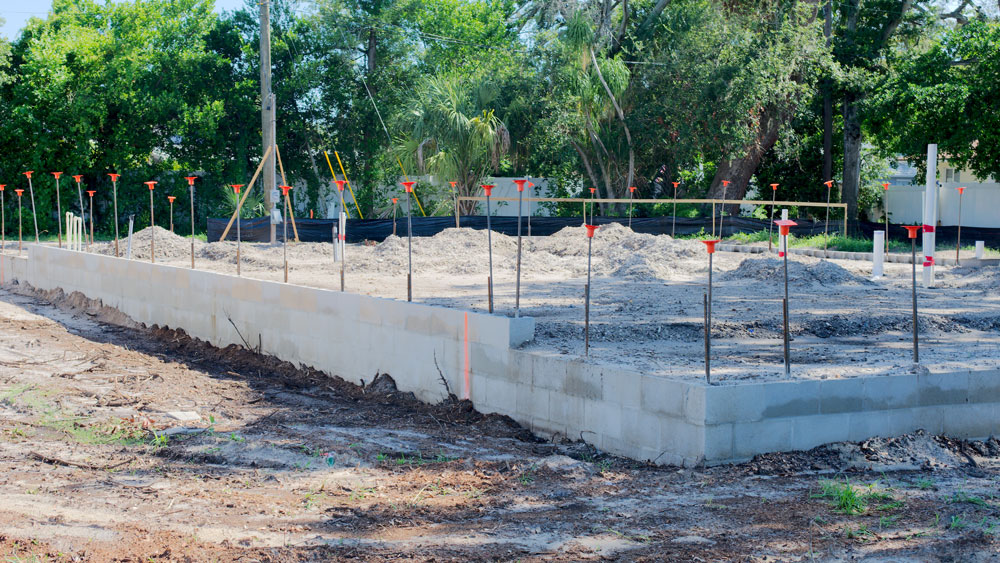
Also known as concrete masonry units, a concrete block foundation is one of the most basic. These individual rectangular blocks are laid into place one at a time by a mason. Rebar is added as specified by structural engineering requirements to provide additional reinforcement to accommodate heavy loads and pressure points.
Pros: Concrete blocks are the most affordable of all four foundation methods. They are also relatively easy to install and don’t require the use of heavy machinery (like concrete trucks), making them an ideal choice for difficult-to-reach building sites, such as an island home.
Cons: Each block is individually installed by hand, making this method extremely slow. After the blocks are in place, there is more to do if your plans include a basement. Concrete blocks have zero insulation, requiring an interior stick-frame wall to be constructed inside the perimeter wall. Adding the insulation is yet another step.
Poured Concrete

By Victor / Adobe Stock
Unlike concrete blocks, which are built with a mason, a poured concrete foundation utilizes steel concrete forms, set vertically, with rebar inside them. Concrete is pumped and poured into the forms with concrete and pumper trucks. After a couple of days of curing, it’s dry enough to remove the forms, leaving a single, monolithic vertical perimeter wall. Now the foundation is ready for the flooring system.
Pros: With an experienced crew, a poured concrete foundation will go much faster than concrete blocks. This is especially beneficial for timber frame homes with a late-season construction start date.
Cons: Just as with concrete blocks, if your plans include a basement, a construction crew must still return and build stick frame walls inside the perimeter walls and insulate.
Insulated Concrete Forms (ICFs)
By True Pixel Art / Adobe Stock
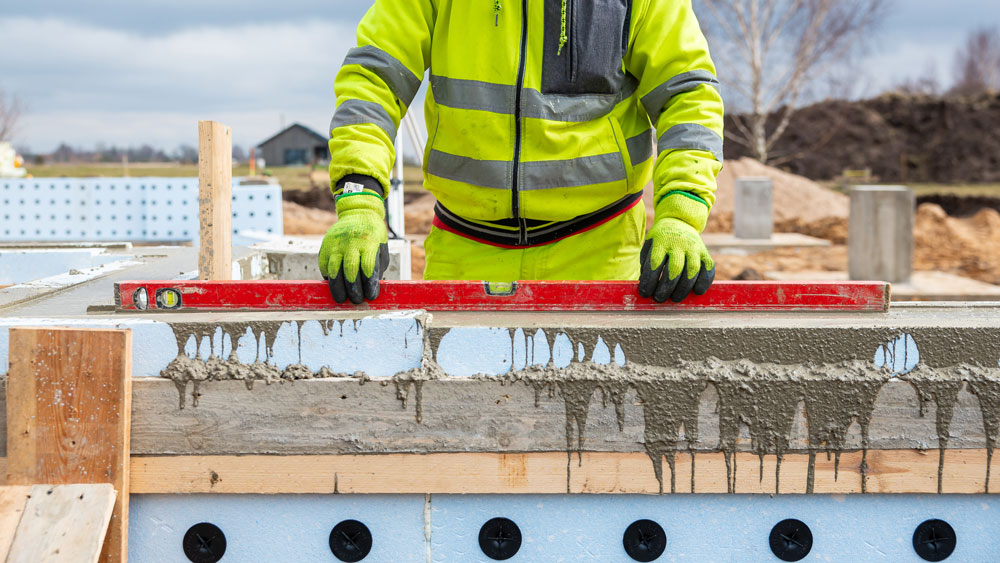
Insulated concrete forms are made of a rigid insulation inside and outside the form with retainer ties in the middle. Each form is laid horizontally, and additional forms are stacked vertically on top, much like a LEGO wall. Once the forms are in place, concrete is poured into the forms.
Pros: The forms are lightweight and easy to handle, and they provide insulation from day one. With plastic ribs every 16 inches, the forms are designed so that drywall can be applied directly, making for quick interior finishing.
Cons: The concrete must cure, which requires more time when compared to pre-manufactured concrete panels. The exterior must be very carefully protected from moisture, as expanded polystyrene will deteriorate.
Pre-Manufactured Forms
Relatively new to the scene compared to other foundations, this precast, panelized concrete foundation wall system cranes pre-manufactured walls into place on top of a gravel bed, where they are then fastened together. These panels come with interior insulation already in place and are already studded for drywall application. Home plans are sent to the factory so the panels also have holes for wiring.
Pros: This wall system is erected very quickly. Because they are machine-manufactured in a precision-controlled environment, they are extremely accurate. Having the wiring holes already in place improves construction efficiency. They are also about half the cost of a poured foundation and typically come with a warranty.
Cons: Care should be taken in construction sites with steep grades to make sure the hydraulic pressure coming from above the home is carefully managed away from the foundation.
The owner of Woodhouse, Pat Seaman, opted for pre-manufactured forms for his own personal timber frame structures. Watch a video (above) of his own Woodhouse home foundation being erected.
“We chose the panelized system because it’s about half the cost of a poured foundation, comes with a warranty, and when I used it on our little winery that we built five years ago, I found it to be super accurate,” Pat says.
What is a Crawl Space?
By Grandbrothers / Adobe Stock
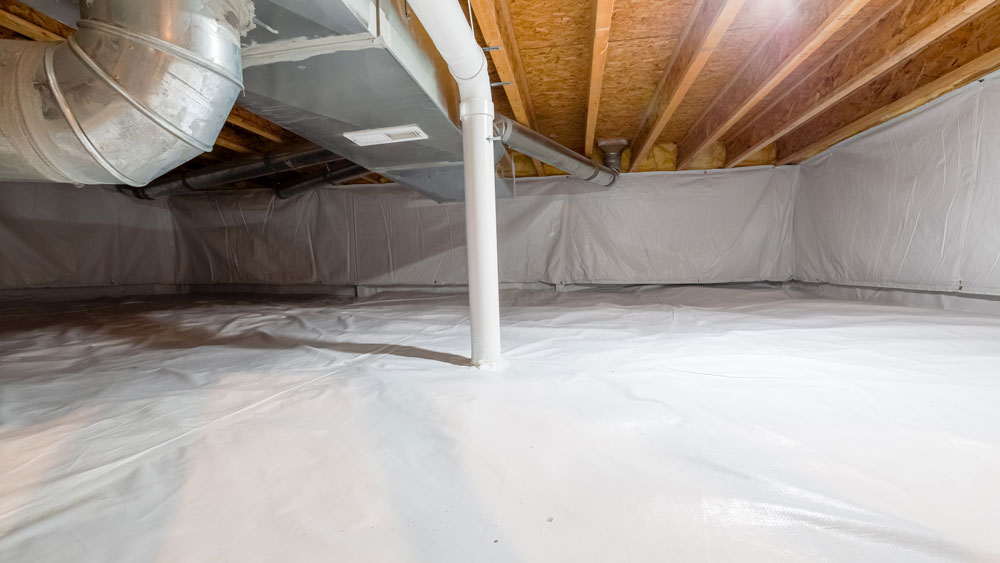
Many people mistakenly think crawl spaces are a different type of foundation. Project Coordination Manager at Woodhouse, Todd Davey, explains that a crawl space is just a very short basement that’s not usable except for running plumbing or electrical infrastructure. Another misconception is that crawl spaces are cheaper than a full foundation. However, the cost difference is actually pretty small.
What are the Other Supporting Elements of a Foundation?

By Tom / Adobe Stock
Footers support the perimeter wall and spread the structure’s weight uniformly across the compacted soil. Without footers, the structure would sink unevenly, resulting in cracks and other issues.
Todd explains that soil type is usually not an issue; however, there are exceptions. For example, at one waterside Woodhouse project, the soil acted like a sponge. Pilings had to be driven deep into the ground before the footers were poured.
There are special considerations for footers and perimeter foundation walls in timber frame homes due to their hefty posts and beams. Support is required under each post, and the perimeter walls must be at least 10 inches thick. In comparison, 6-8 inches are needed for conventional homes.
It’s important to note that panelized wall systems do not have conventional footers. They have a carefully compacted gravel bed that the panels are set upon.
How is Water Managed Around a Foundation?
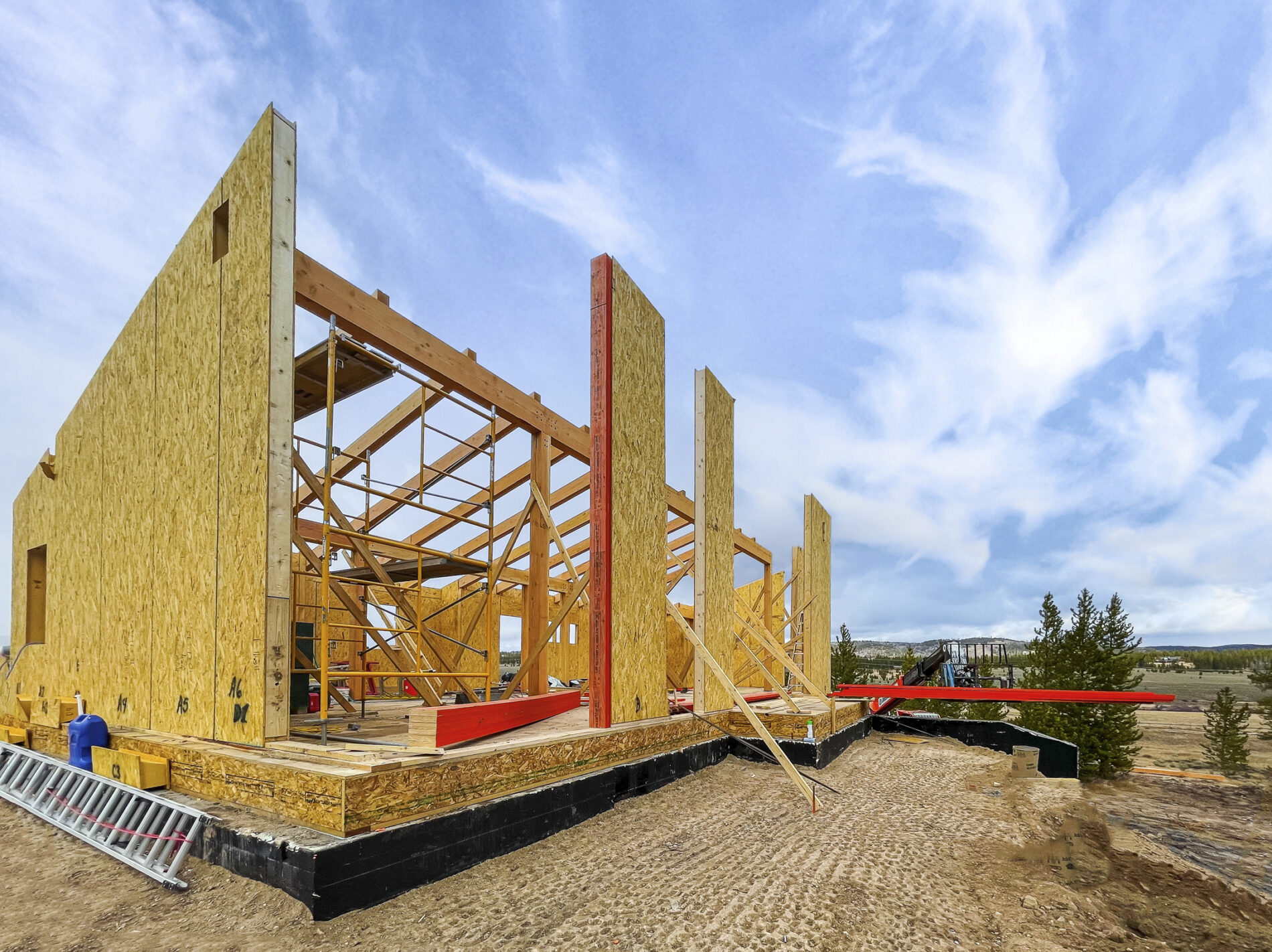
Concrete is porous, and good water management practices safeguard the foundation’s structural integrity. This is critical in locales with freeze-thaw cycles. Moisture that seeps into a foundation as a liquid will freeze and expand, causing cracks. Waterproofing the foundation with a protective coating or dimple board is a standard practice.
Site slope affects drainage and requires proper site planning. For rainwater drainage, gutter drains must be set far from the foundation, in a spot where the water won’t flow back to the house. Ideally, gutters channel water to downspouts, then underground pipes that empty several hundred feet away.
We’re Just Scratching the Surface…
Curious to learn more? Get a concrete view of foundations at work in Woodhouse timber frame homes. Tour our online gallery or contact your Woodhouse Regional Project Manager to learn more about solutions for your unique project.
Meet the Experts
Todd Davey contributed to this post. Todd is the Project Coordination Manager at Woodhouse.


