What is the best type of roof for timber frame homes? Learn how architecture, materials, and more factor into the right roof style for your custom project.
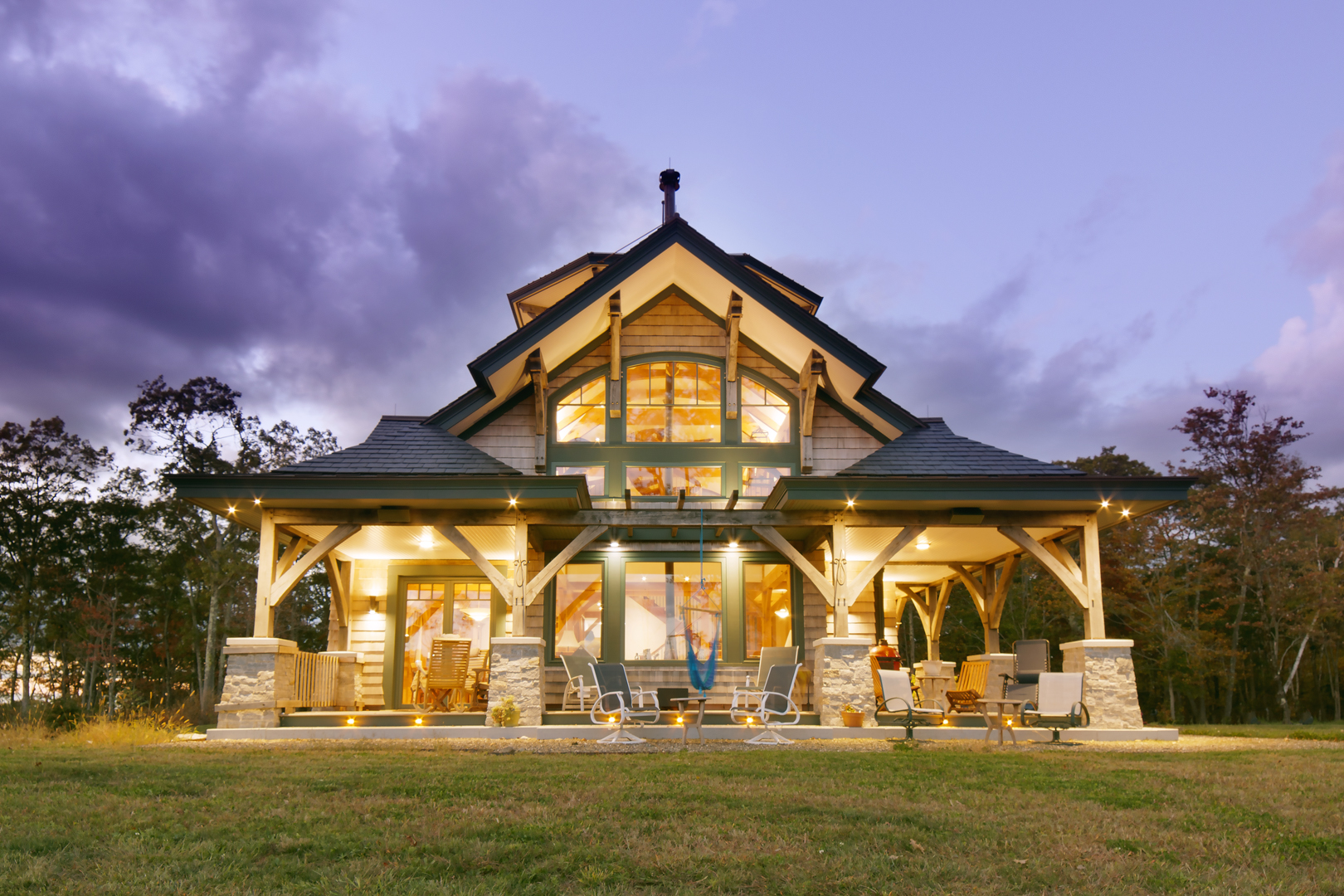
Table of Contents:
“Vented” Roofs and Woodhouse Timber Frame Homes
Which Roof Style Is Best for My Home’s Architecture?
How Do Roofs Influence Design Considerations?
Rooftop Materials for Timber Frame Homes and Why It Matters
Timber frame homes are regal statements of strength and artistry; muscular posts and beams fend off extreme weather while channeling light into living spaces. The crowning touch of all timber frame homes is the roof. Roofs are the ultimate guardians of durability and aesthetics, dialing up timber frame homes’ architectural style and improving performance.
From architectural aspects to technical systems to material choices, we’ve covered your top questions on roof options.
What Is a Roof System?
A roof system is the entirety of all the materials, components, and structural elements that comprise the roof of a structure. It is the unifying piece that transforms foundations and walls into completed homes.
Timber frame buildings stand apart with their high levels of customization in floor plans and home styles and their exceptional energy efficiency. These qualities extend to the roof. The right roof system for any home will be influenced by locale, property site, budget, home orientation, home style, and personal taste.
“Vented” Roofs and Woodhouse Timber Frame Homes
The term “vented roofs” can imply two different meanings. In a conventional home, vents installed along the roofline or in the gables bring airflow to the attic and help prevent condensation and mold by allowing trapped moisture to escape.
The other type of “vented” roof you may hear about is a “cold roof.” This is something Woodhouse always recommends with structural insulated panels (SIPs).
A cold roof is installed above the SIPs, with a continuous air gap—typically around 1½ inches in Woodhouse homes—from eave to ridge. This airflow helps exhaust heat and protects the panels from high temperatures. It also provides an added layer of protection against moisture: if warm, humid air were ever to escape through a small imperfection in the panel installation, the vented air space allows that moisture to dissipate rather than becoming trapped. For this reason, Woodhouse consistently recommends a vented cold roof in conjunction with SIPs as a best practice.
Which Roof Style Is Best for My Timber Frame Home’s Architecture?
From breezy coastal chic to sleek modernity to classic cabins — there is a timber frame home style for every lifestyle. Rooflines accentuate aesthetics, and timber frame homes’ impressive beams create architectural details that are simply not possible in a conventional stick frame home. While you certainly can select any type of roof style for your timber frame home, certain designs accentuate the desired look for bespoke polish and presentation.
Gable Roofs
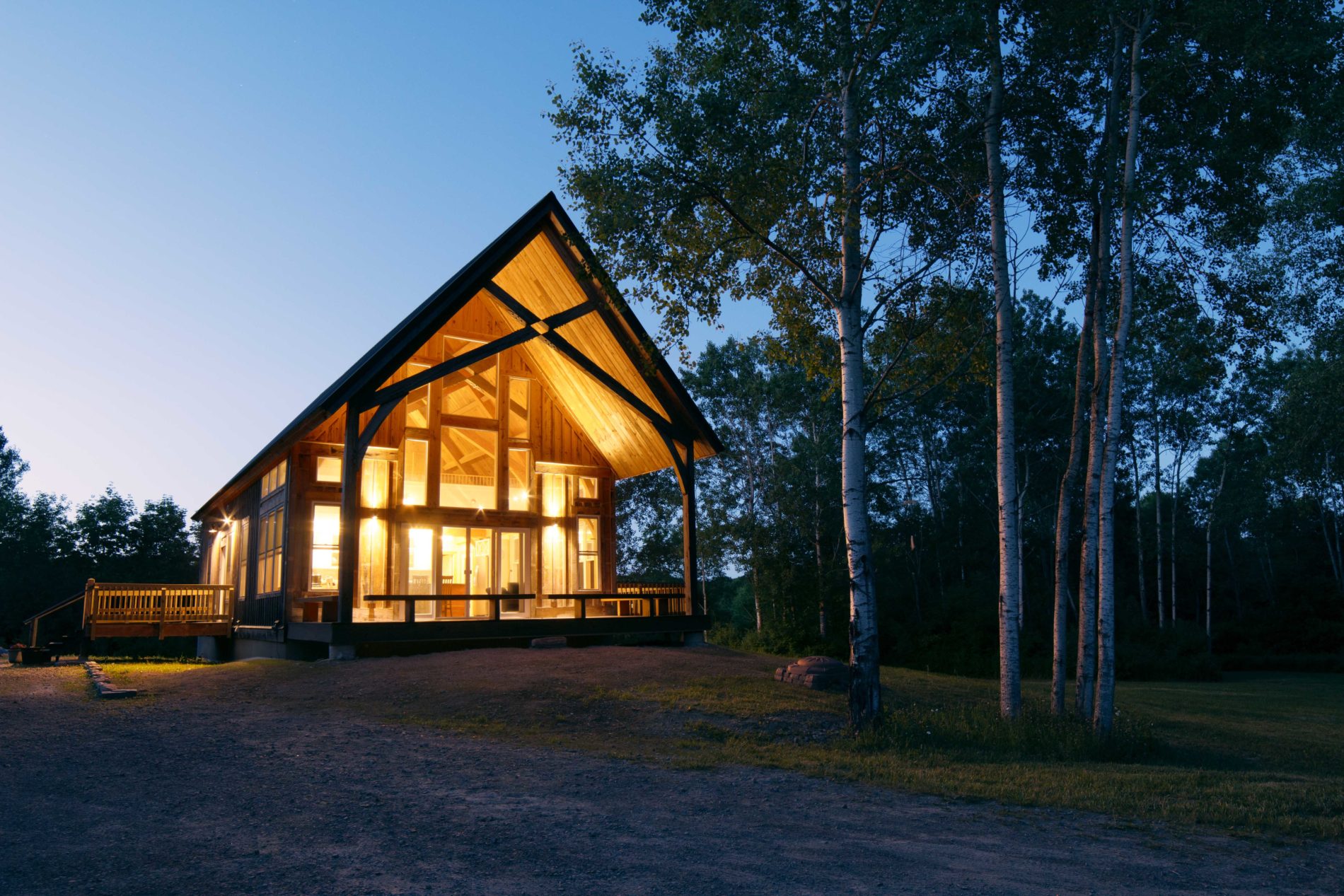
For those drawn to classic lines, gable roofs are the pinnacle of enduring, timeless design. Stately and versatile, gable roofs are characterized by two pitched sides meeting along a central ridge. Gable roofs can be dramatic, like this swanky Woodhouse timberframe cottage, or enduring, like the HanfordV1 or humble ValleyView.
Hip Roofs
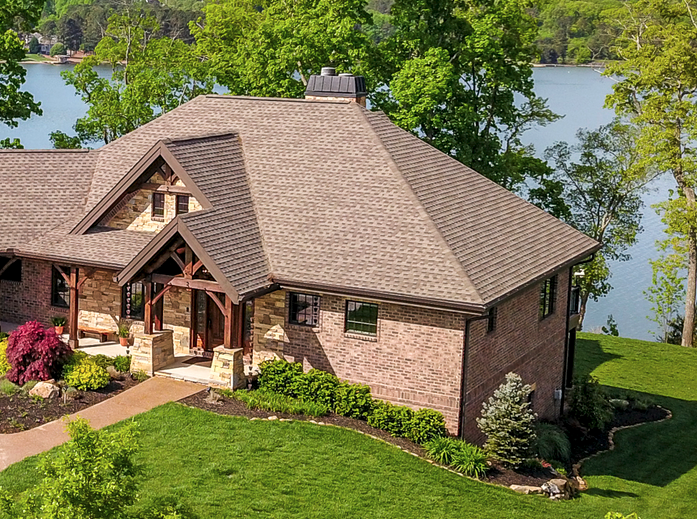
With all four sides of the rectangular footprint sloping upward, hip roofs are visually balanced with elegant lines. Check out how the hipped roof over the main body of this Tennessee home (above) creates a timeless appeal.
Shed Roofs
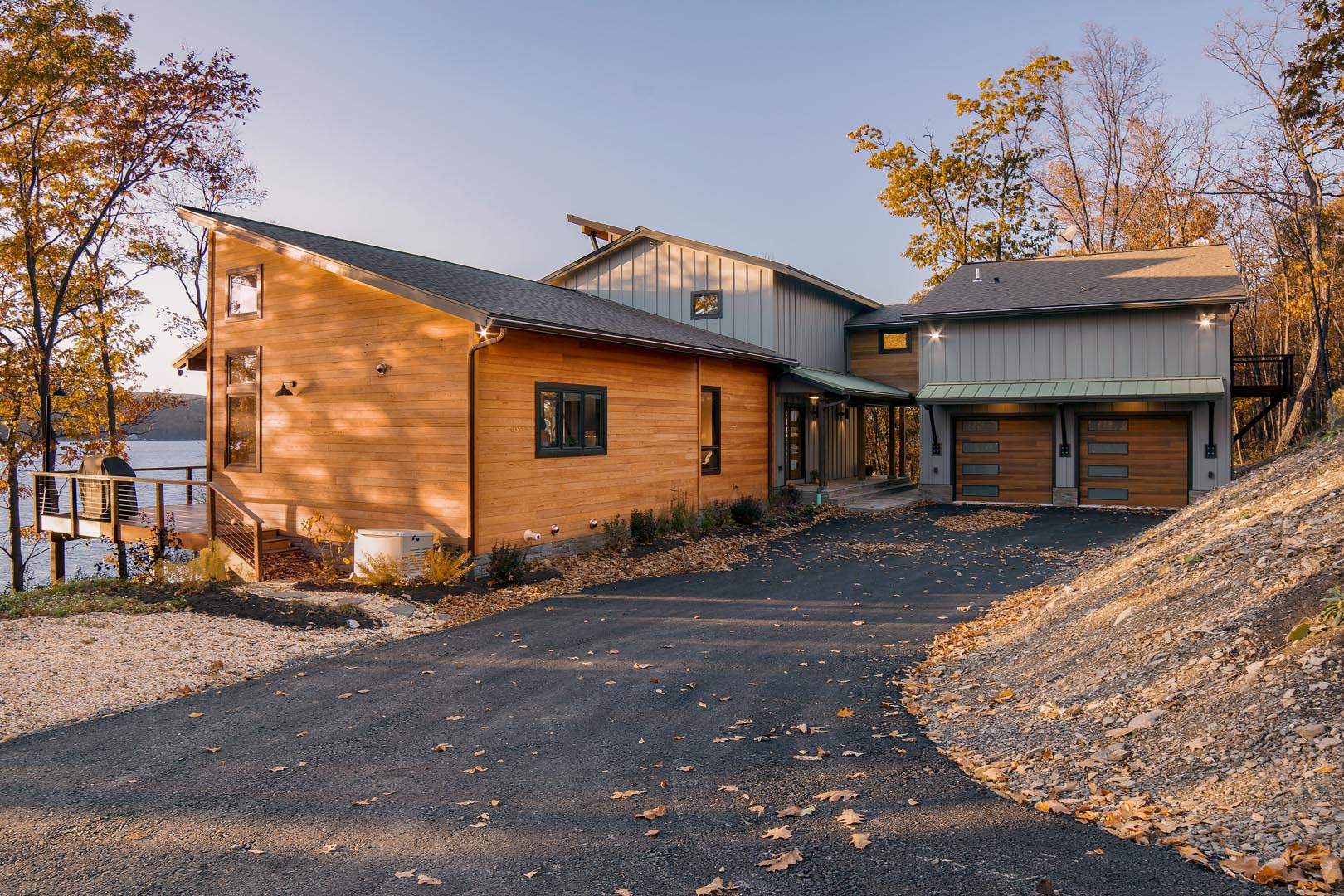
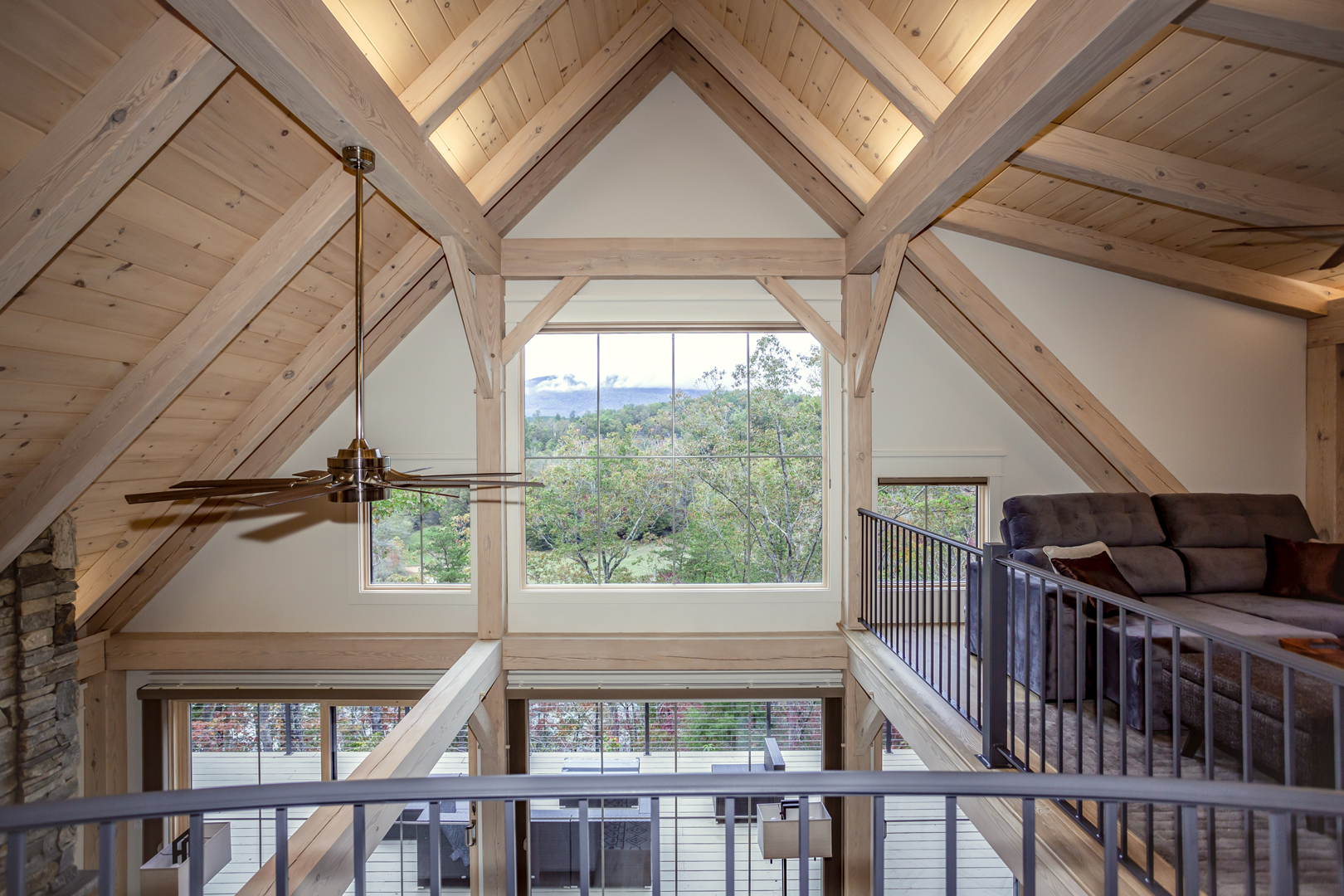
Love modernism? The single-sloped, monoplane shed roof, with its crisp, minimalist roofline, is for you. This roof stamps a modern vibe to traditional mountain and lake homes, evidenced in projects like this sleek lake getaway in New York. Check it out from the inside below:

Gambrel Roofs

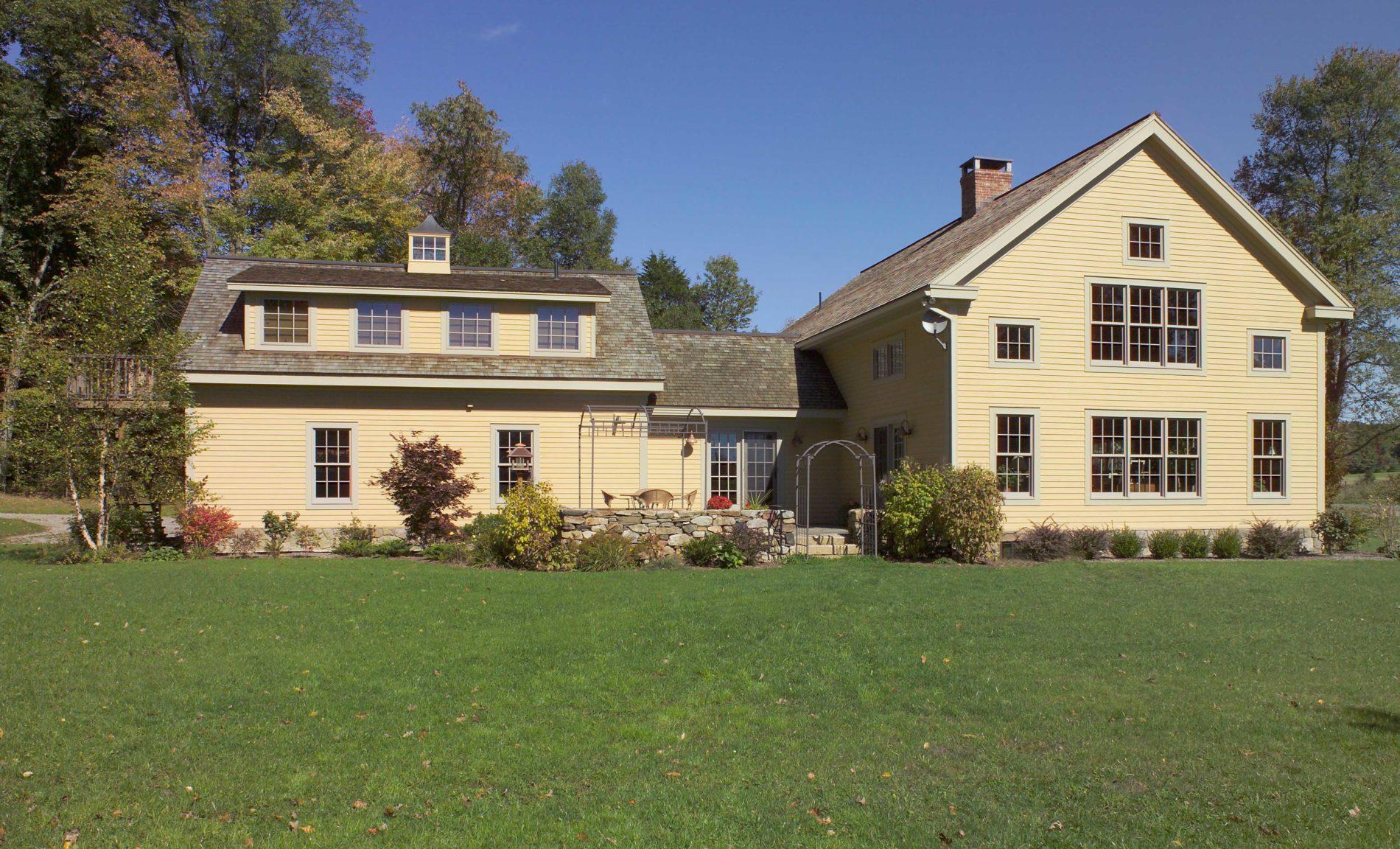
The distinct, double-sloped, symmetrical design of gambrel roofs is deceptively simple. The steeper, lower slope gives way to a shallow upper slope, bringing more space to the interior upper levels. Gambrel roofs bring Midwestern barn-inspired charm and practicality to rural timber frame homes. The AntelopeValley plan creatively combines a gambrel roof with a dramatic A-frame-style entry.
Combination or Custom Roofs
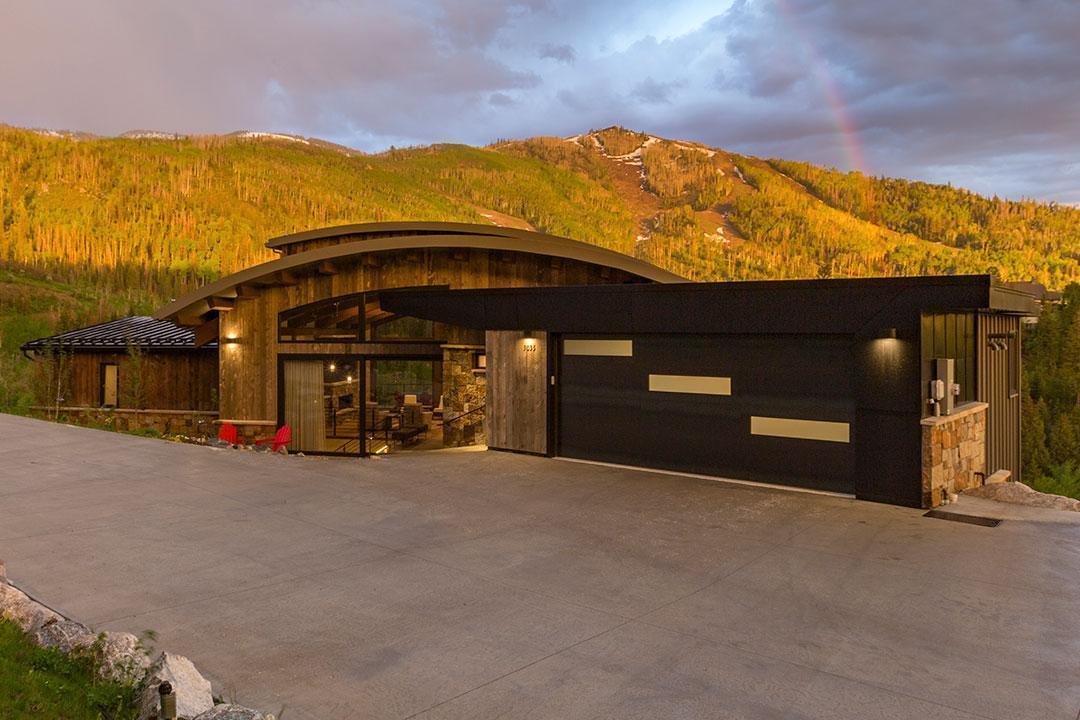
For dynamic profiles with main character energy, combine roof styles or use a custom design. The seductive curvature in this custom Steamboat home roofline has no equal. And the roof of this magical Berkshire sanctuary is its crown jewel.
Explore our gallery for more real-life Woodhouse roof styles.
How Do Roofs Influence Design Considerations?
Even while sitting atop a home, roofs are heavy lifters in marrying design to performance. Roof styles directly impact:
Natural Light
Short overhangs let natural light pour into a space. Conversely, long overhangs will shade windows from the heat and glare of afternoon sun.
Ventilation
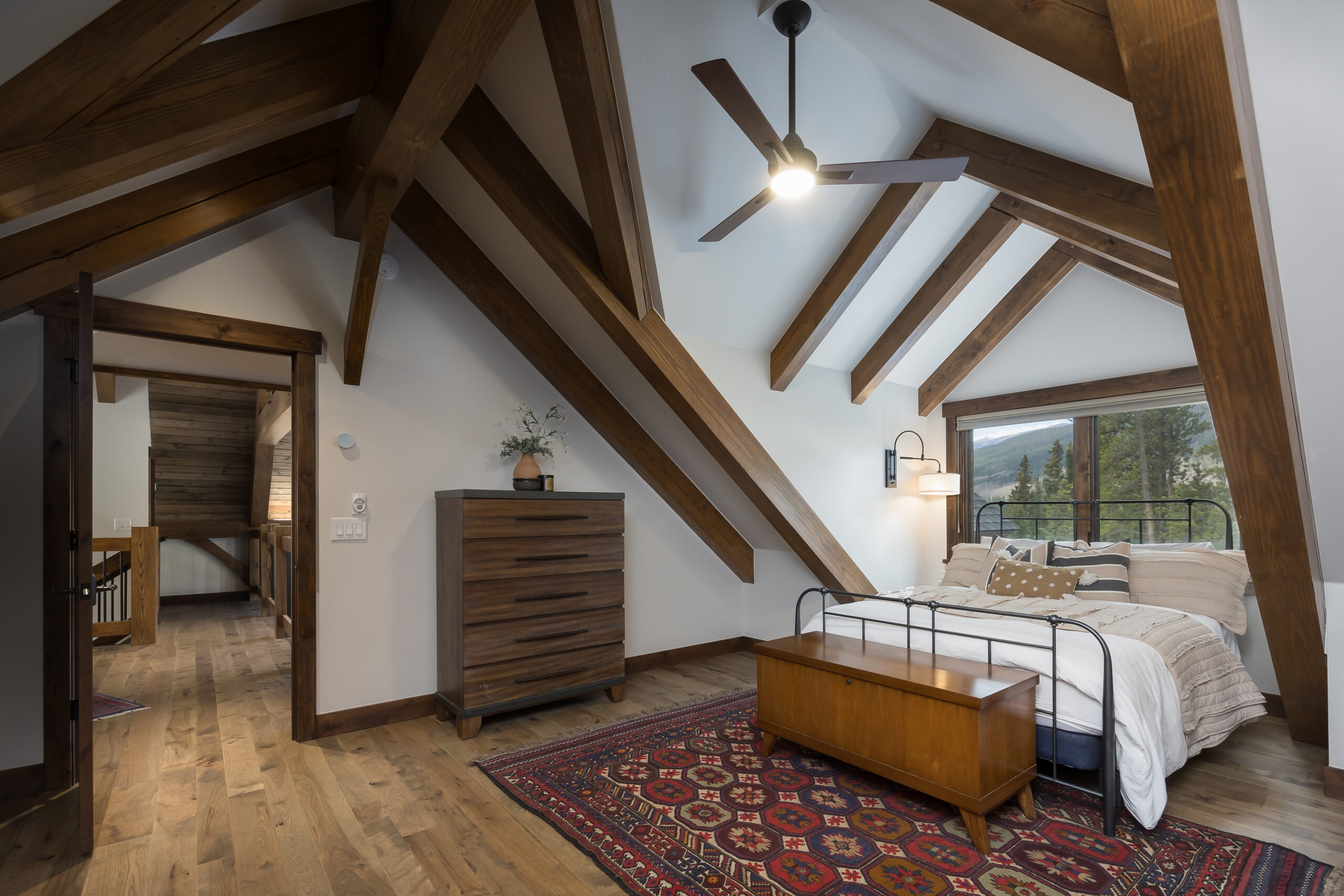
For those who enjoy fresh, outdoor breezes, dormers are a good solution. Dormers provide accessible vertical window space to improve airflow in the upper levels of timber frame homes.
Snow and Rain Management
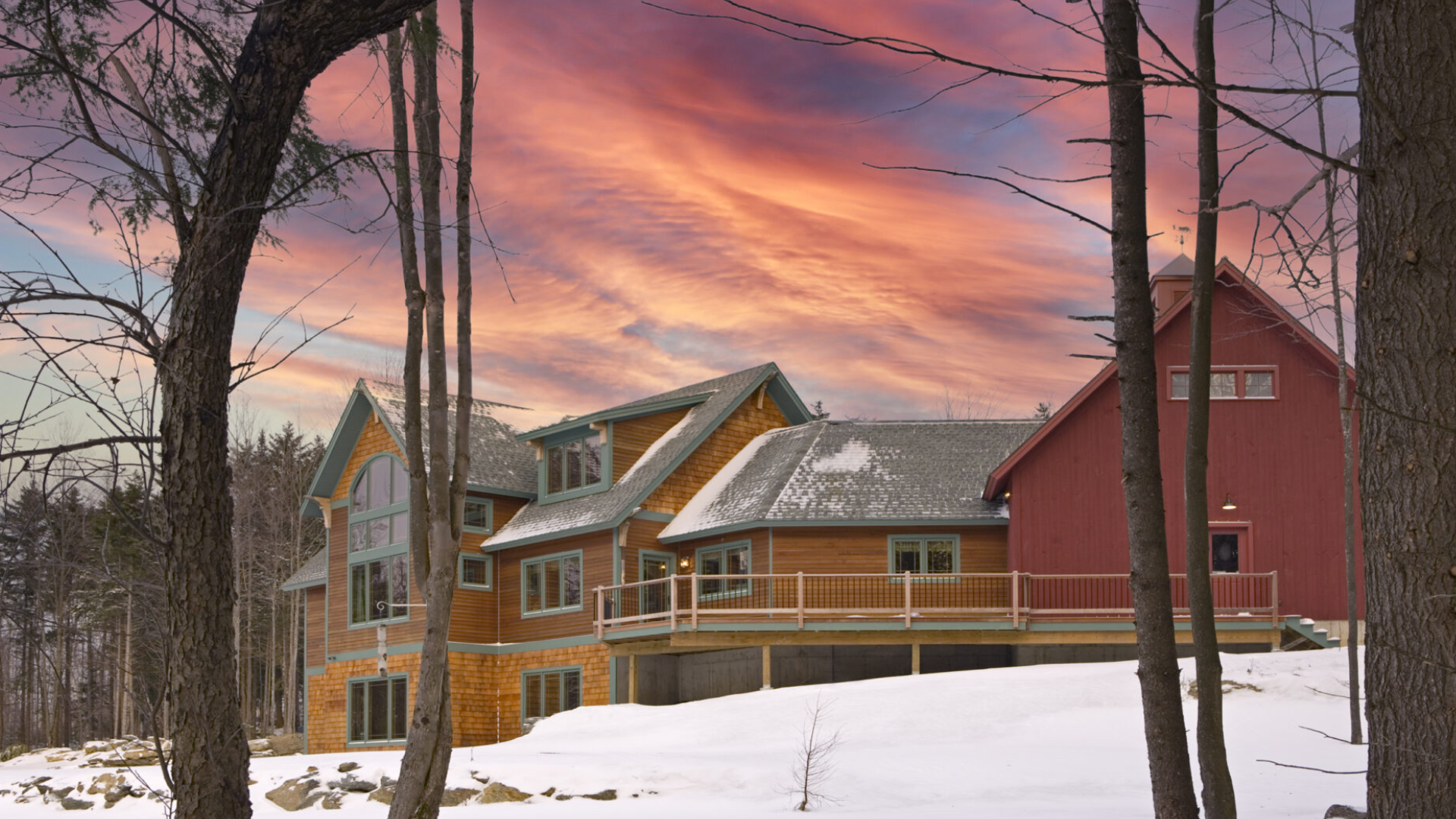
Sloped rooflines shed water, and when placed strategically, this watershed can be controlled to flow into gutters and deposited away from the home. In areas with high snowfall, rooflines with steep pitches — gable, hip, or steep-sloped shed styles — will prevent the buildup of snow loads.
Architectural Style
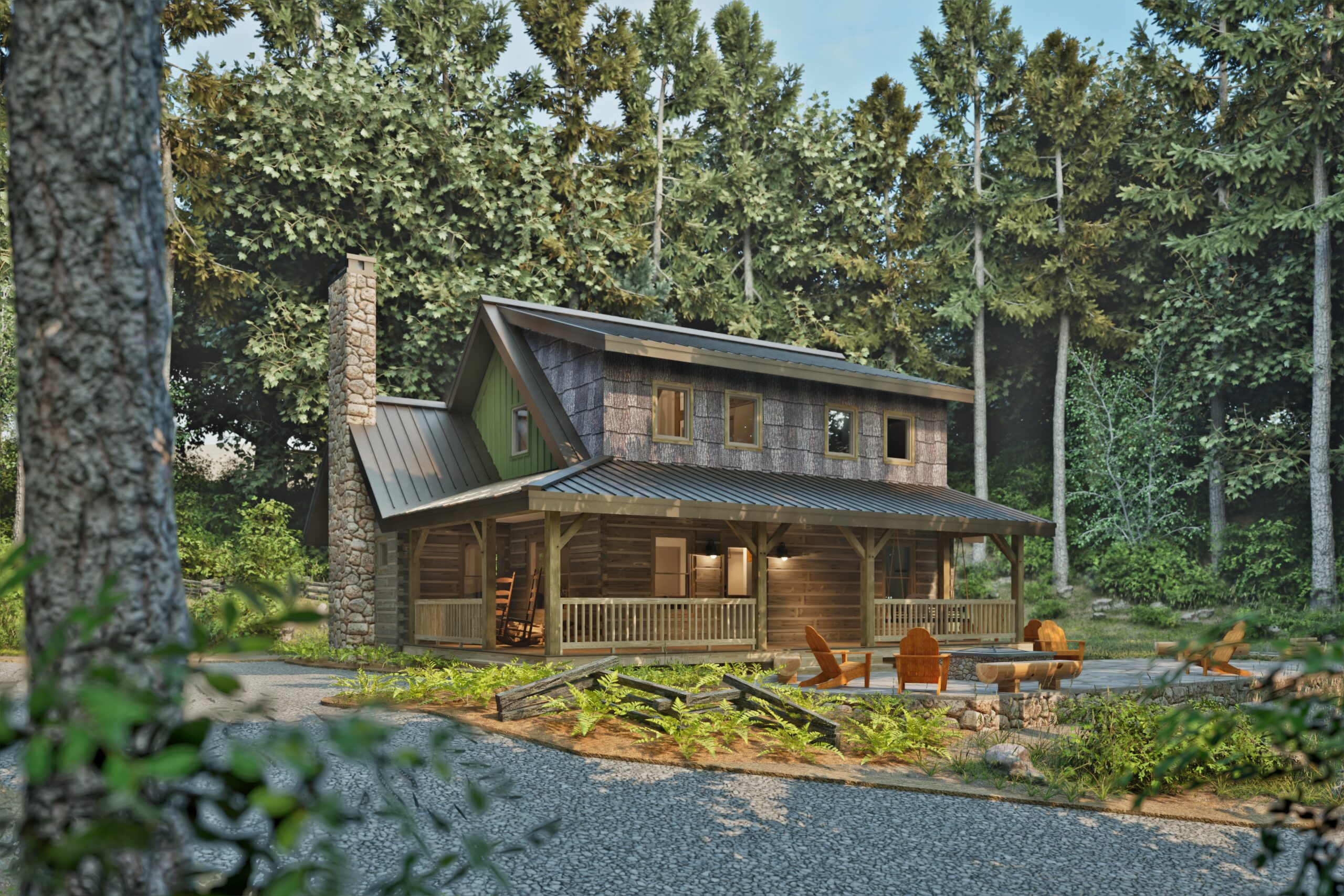
Many regions have their own architectural vernacular born from idiosyncrasies in weather, available materials, and culture. Roof styles are part of these unique designs. Take, for instance, gable roofs and shed-style, wrap-around covered porches of Appalachian homes or Adirondack cabins and great camps.
Rooftop Materials for Timber Frame Homes and Why They Matter
Just as roofs come in many styles, so do rooftop materials. Selections are based on balancing regional climate, energy goals, budget, and desired aesthetic. Here are some guiding tips:
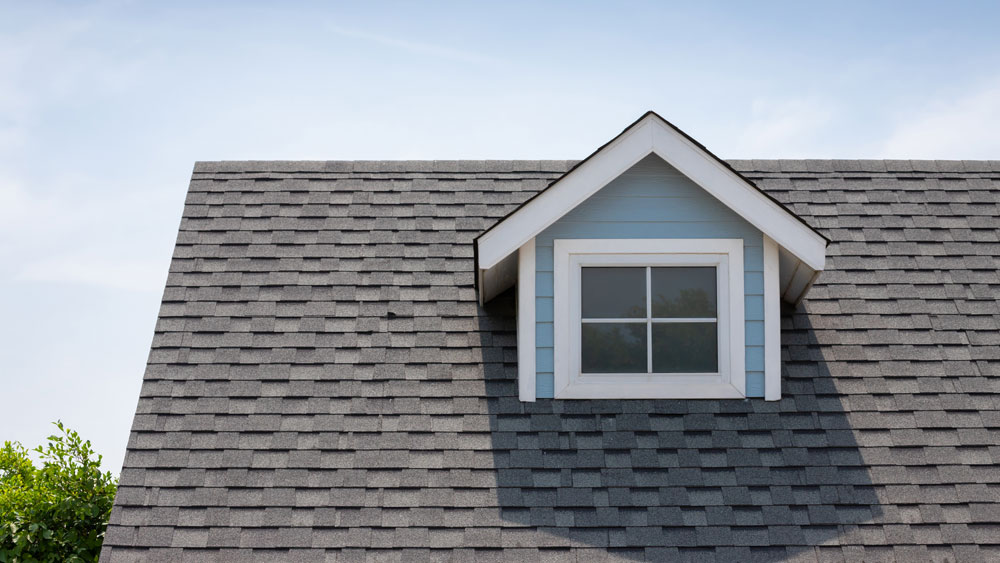
Asphalt shingles are common, affordable, easy to replace and are available in many colors. Darker colors absorb heat while lighter colors reflect it. (Image: Adobe / Rattanachat)
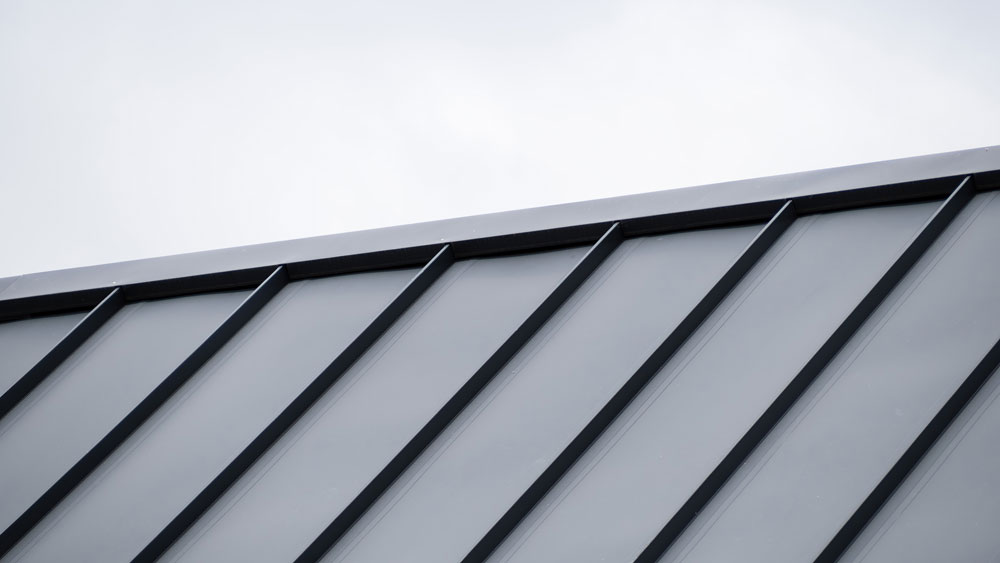
Standing seam metal is low-maintenance and often used in mountain or coastal settings. Metal roofs punctuate modern, rustic, or farmhouse looks, and even combine them. (Image: Adobe / Emagnetic)
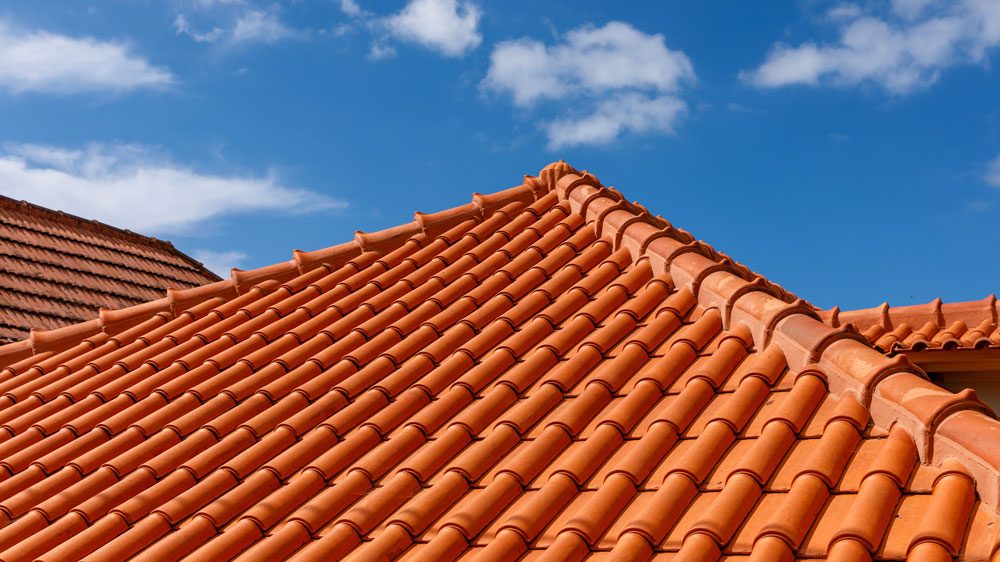
Tile is timeless and durable, perfect for Southwestern or European-inspired design. (Image: Adobe / 9parusnikov)
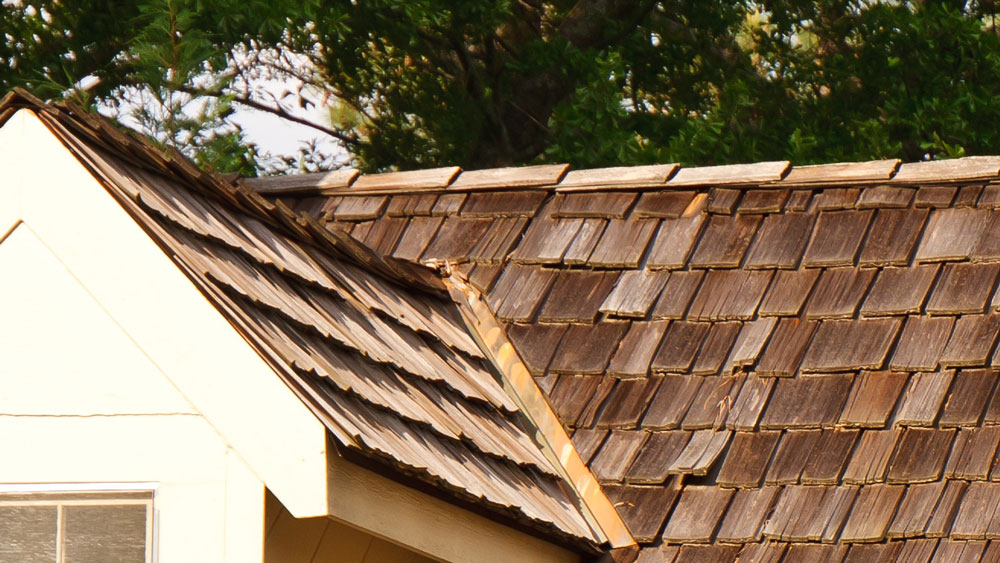
Cedar shake is a classic, natural material and associated with several distinct aesthetics. (Image: Adobe / dbvirago)
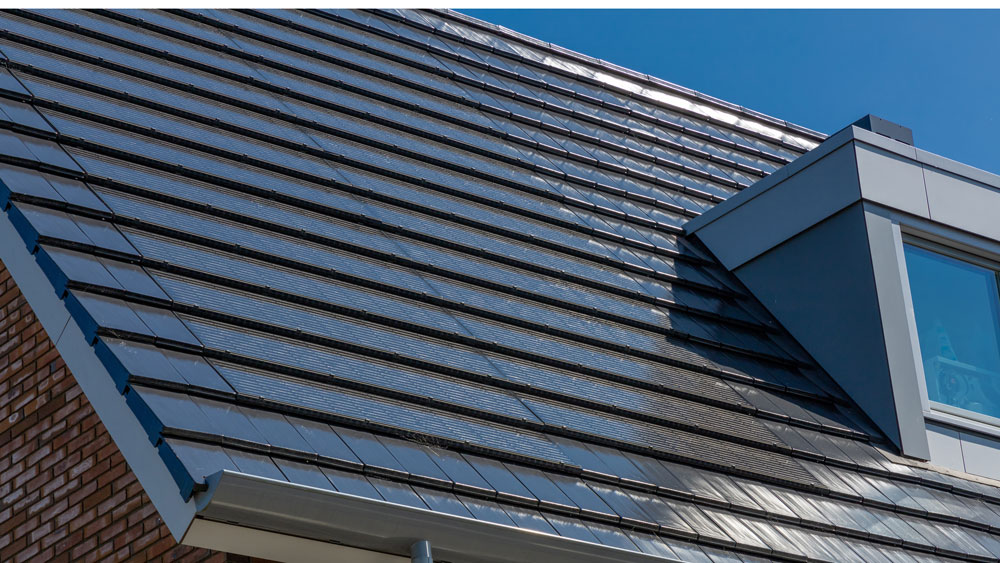
Solar tiles are a sleek, innovative, high-tech solution to amp up your sustainability efforts. (Image: Adobe / PixelBliss)
Topping It All Off
Have questions? Ideas? We want to share our knowledge. Reach out for complimentary, customized insights no matter where you are in your timber-framed dream-home timeline. Contact us today.
Meet the Experts
Dwayne Shell reviewed this post. Dwayne is the Director of Sales and Marketing at Woodhouse, The Timber Frame Company with over 30 years of experience in conventional and manufactured home sales.


